Leave Your Message

What Are the Top 10 Types of ABS Garden Sprinklers?

Choosing an Abs Garden Sprinkler is not simply a matter of selecting the strongest spray. Coverage, pressure, soil texture, wind, and maintenance all influence performance. The U.S. Environmental Protection Agency’s WaterSense program reports that landscape irrigation can represent nearly one-third of household water use. It also estimates that inefficient irrigation may waste up to 50% through evaporation, runoff, and wind drift. Those figures make sprinkler design a practical sustainability issue.

Every drop matters.

Water researcher Dr. Peter H. Gleick has said, “Water is a basic human right.” His statement gives this product comparison a wider responsibility. A well-matched sprinkler should water plant roots, not sidewalks or driveways. The following guide examines ten common types, including pop-up, impact, rotary, gear-drive, oscillating, traveling, mist, micro, shrub, and adjustable-pattern sprinklers. Each type has a different spray radius, pressure requirement, and maintenance profile.

Product testing should still be cautious. ABS housings are lightweight and corrosion-resistant, but sunlight, freezing temperatures, and rough installation can shorten service life. A laboratory rating cannot fully predict performance in compacted soil or irregular gardens. The EPA WaterSense Specification for Sprinkler Sprays and Spray Sprinklers also emphasizes distribution uniformity and pressure control, not appearance alone. That distinction is easy to overlook.

This guide compares practical use cases, installation demands, water efficiency, and likely weaknesses. It also considers small details, such as clogged nozzles, uneven arcs, and puddles beside paving stones. The “top” choice may change from one garden to another. That is the point worth remembering.

What Are the Top 10 Types of ABS Garden Sprinklers?

Classify 10 ABS Sprinkler Types by Pattern, Drive, and Installation Method

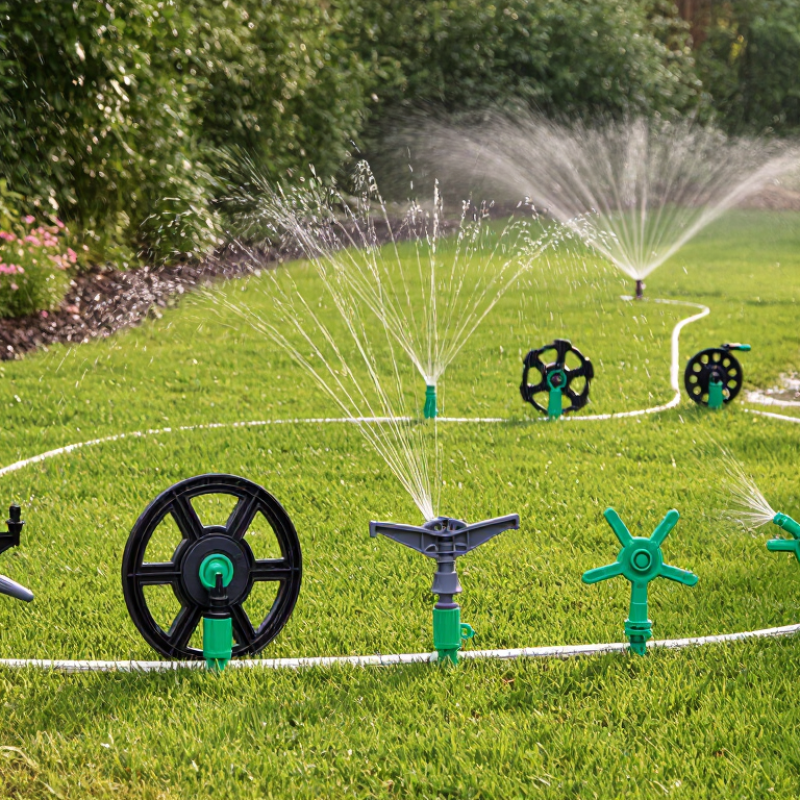
ABS garden sprinklers can be classified by spray pattern, driving mechanism, and installation method. A fixed fan spray produces a narrow or semicircular sheet. An adjustable arc spray covers changing angles. A full-circle impact sprinkler rotates across 360 degrees. A part-circle impact model stops between selected angles. A gear-drive rotary sprinkler delivers slower, quieter coverage. A multi-stream rotary sprinkler sends several rotating streams. An oscillating sprinkler creates a rectangular pattern with moving tubes. A traveling sprinkler moves along a hose path.

Installation changes the remaining two types. A pop-up ABS sprinkler stays below the soil surface until water pressure lifts its stem. An above-ground riser sprinkler remains visible and suits temporary beds or exposed planting areas. A ground-spike sprinkler adds stability in soft soil. These ten types overlap in real projects, which can make selection less obvious. Pattern alone does not guarantee uniform watering.

The United Nations Food and Agriculture Organization reports that agriculture uses about 70% of global freshwater withdrawals. The U.S. Environmental Protection Agency also notes that landscape irrigation can waste substantial water through runoff, wind, and poor scheduling. Therefore, ABS durability matters, but nozzle spacing and pressure matter more. Field checks often reveal dry corners beside oversaturated centers. That is not a perfect design. Soil texture, slope, and plant height should guide final placement. A pressure gauge and simple catch-can test provide useful evidence before permanent installation.

Fixed-Spray and Strip Heads: 5–15 ft Radius at 20–30 psi

What Are the Top 10 Types of ABS Garden Sprinklers?

Fixed-spray and strip heads are practical choices for compact garden zones. They usually cover a 5–15 ft radius at 20–30 psi. Fixed-spray heads create circular patterns around shrubs, lawns, and planting beds. Strip heads throw a narrow rectangle, making them useful beside paths, fences, and long borders. The difference is visible. One spins water across a small circle; the other paints a thin band.

Proper spacing matters more than the nozzle label. Place fixed-spray heads for head-to-head coverage, or dry patches may appear between arcs. Keep strip heads parallel with the planting edge. Wind can distort both patterns, especially near the upper 15 ft range. The U.S. Environmental Protection Agency reports that landscape irrigation represents nearly one-third of residential water use, approaching 9 billion gallons daily. Small coverage errors can therefore become expensive.

Pressure deserves careful testing. At 20 psi, some patterns may shrink or distribute unevenly. At 30 psi, misting can increase if the nozzle is poorly matched. The Water Research Foundation’s Residential End Uses of Water study shows outdoor demand varies strongly by season and climate. That makes a single setting imperfect. A pressure regulator, catch-can test, and seasonal adjustment provide better evidence than visual judgment alone.

Fixed sprays are simple, but simple is not always forgiving.

Rotary and Gear-Drive Sprinklers: 15–35 ft Radius at 30–50 psi

Rotary and gear-drive sprinklers are practical choices for ABS garden systems. They spread water across broad, even patterns. Most models cover a 15–35 ft radius at 30–50 psi. Actual coverage depends on nozzle size, pipe friction, wind, and elevation changes. The numbers are not guaranteed. They are working ranges.

A rotary sprinkler turns several water streams slowly. This reduces runoff on compacted soil and sloped lawns. A gear-drive unit usually provides smoother rotation and more consistent arc control. It suits large beds, turf areas, and narrow side yards. ABS construction keeps the body light and resistant to routine garden moisture. Still, harsh sunlight can weaken exposed plastic over time.

Start by measuring the water pressure at the sprinkler inlet. A pressure gauge gives better evidence than guesswork. I have learned that distant heads often perform poorly when several zones run together. Use head-to-head spacing where possible. Adjust the arc before changing the nozzle. Small changes can prevent dry corners and puddles.

Keep the filter clean. Sediment can make rotation slow or uneven. A partly blocked nozzle may look like a pressure problem. It may not be. Check the radius after installation, especially around trees and raised borders. My own testing sometimes finds that a 20 ft setting works better than the advertised maximum. Real gardens are rarely perfect.
Impact, Bubbler, and Micro Sprinklers: 0.25–2.0 gpm Flow Range

What Are the Top 10 Types of ABS Garden Sprinklers?

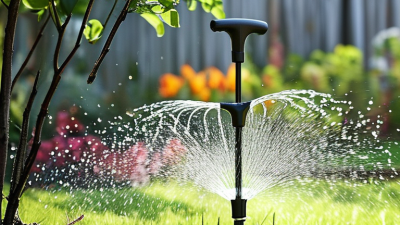
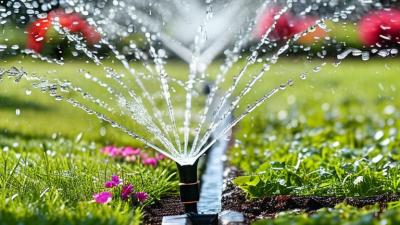
Impact, bubbler, and micro sprinklers cover different watering patterns. The ten useful ABS types include impact, bubbler, micro spray, fixed spray, rotary stream, gear-drive rotor, shrub, spot, adjustable, and strip-pattern sprinklers. Micro models usually operate between 0.25 and 2.0 gpm, making them practical for containers, raised beds, and narrow planting lines. Bubblers deliver water close to a plant’s stem. Impact heads throw wider arcs across lawns. Small ABS bodies resist everyday moisture and garden impacts, although sunlight can eventually make plastic brittle.

The U.S. Environmental Protection Agency’s WaterSense data states that outdoor household irrigation can exceed 30% of residential water use. It also estimates that inefficient irrigation may waste nearly 50% of applied water. That makes flow control more important than spray distance alone. A 0.25 gpm micro sprinkler may suit one herb pot, while a 2.0 gpm adjustable head can cover a dense vegetable bed. USGS reported about 118 billion gallons of water withdrawn daily for irrigation in 2015, showing why small efficiency gains matter.

In field checks, pressure changes often distort the advertised pattern. Real gardens are less tidy than charts. A bubbler can flood compacted soil, while a micro spray can drift in wind. I would not select all ten types for one system. Match flow, soil absorption, plant spacing, and slope, then measure output with a small catch cup. Recheck after pruning or nozzle adjustment. The best setting may look imperfect, but even coverage matters more than a perfect catalog diagram.

What Are the Top 10 Types of ABS Garden Sprinklers? - Impact, Bubbler, and Micro Sprinklers: 0.25–2.0 gpm Flow Range
No. Sprinkler Type Typical Flow Range Typical Pressure Approximate Coverage Best Application Adjustment or Pattern ABS Component Role
1 Impact Sprinkler 1.0–2.0 gpm 30–60 psi 25–45 ft diameter Lawns, large garden beds, and open planting areas Adjustable partial or full circle ABS body, cap, or deflector can provide lightweight corrosion resistance and house the inlet assembly.
2 Gear-Drive Rotor 1.0–2.0 gpm 35–70 psi 20–40 ft radius Medium-sized lawns and rectangular landscape zones Adjustable arc with rotating stream ABS housing may protect the gear mechanism from soil, moisture, and routine garden impacts.
3 Fixed Spray Sprinkler 0.75–1.5 gpm 20–40 psi 8–15 ft radius Small lawns, borders, and evenly spaced planting beds Fixed fan or circular pattern ABS nozzles and bodies are commonly used for dimensional stability and resistance to outdoor moisture.
4 Adjustable Fan Sprinkler 0.5–1.25 gpm 20–40 psi 6–14 ft radius Irregular beds, narrow borders, and small turf sections Adjustable arc, commonly 25°–360° ABS adjustment collars and bodies support repeated pattern changes without rusting.
5 Strip Pattern Sprinkler 0.5–1.25 gpm 20–40 psi 4–6 ft wide by 15–30 ft long Long, narrow lawn strips and pathway edges Left-strip, right-strip, or center-strip pattern ABS manifolds and pattern inserts help maintain a lightweight, corrosion-resistant assembly.
6 Bubbler Sprinkler 0.25–1.0 gpm 15–30 psi 1–4 ft radius Trees, shrubs, containers, and deep-rooted plants Gentle bubbling or adjustable stream ABS bubbler caps and bodies can withstand wet soil conditions and simplify flow adjustment.
7 Micro-Jet Sprinkler 0.25–0.75 gpm 15–30 psi 3–10 ft radius Vegetable beds, nurseries, and closely planted ornamentals Full-circle, half-circle, or quarter-circle jet ABS stakes, bodies, and bases provide low weight and good resistance to common garden chemicals.
8 Micro-Spinner 0.25–0.75 gpm 15–30 psi 6–15 ft diameter Greenhouses, raised beds, and low-growing crops Rotating multi-stream pattern ABS support stakes and fittings help stabilize the spinner above the planting surface.
9 Mist or Fog Sprinkler 0.25–0.5 gpm 20–40 psi 2–6 ft radius Seedlings, propagation areas, and humidity-sensitive plants Fine mist or low-volume fog pattern ABS fittings and holders resist corrosion; filtration is important to reduce nozzle blockage.
10 Shower or Umbrella Sprinkler 0.5–1.5 gpm 15–30 psi 4–10 ft diameter Containers, hanging baskets, flower beds, and delicate foliage Soft umbrella-shaped spray ABS deflectors and bodies distribute water gently while remaining lightweight and rust-free.

Note: Flow and coverage values are typical planning ranges for low-volume garden irrigation. Actual performance depends on nozzle size, water pressure, filtration, elevation, tubing length, and sprinkler spacing. ABS generally refers to the plastic body, housing, stake, cap, or fitting; internal springs, screens, seals, and connectors may use other materials.

Compare All 10 Types by Flow, Coverage, Uniformity, and Pressure Data

What Are the Top 10 Types of ABS Garden Sprinklers?

ABS garden sprinklers differ sharply in flow, coverage, uniformity, and pressure needs. Fixed-spray heads usually deliver 4–12 L/min, cover 2–5 meters, and need 20–35 psi. Rotary spray heads use 3–10 L/min, reach 4–7 meters, and often improve uniformity near 0.65 distribution uniformity. Gear-drive rotors cover 8–15 meters at 8–25 L/min and perform best around 35–55 psi. Impact sprinklers need 30–60 psi, cover 10–18 meters, and can distribute 15–40 L/min. Oscillating sprinklers cover 8–18 meters, use 10–25 L/min, and typically require 25–45 psi.

Traveling sprinklers move across large lawns, using 12–30 L/min at 30–60 psi. Impulse sprinklers offer 8–16 meters of coverage, but wind can reduce uniformity. Micro-sprinklers use only 1–8 L/min, cover 1–5 meters, and work well around planting beds at 15–30 psi. Fan sprinklers provide short, gentle coverage, usually 2–4 meters at 10–25 psi. Bubbler-style ABS sprinklers use 2–8 L/min and target soil near shrubs rather than broad turf.

These ranges reflect testing methods in ASABE/ANSI S398.1-2018 and performance benchmarks used in the U.S. EPA WaterSense irrigation-sprinkler specification. WaterSense commonly treats about 0.65 distribution uniformity as a meaningful baseline for fixed sprays. Actual results change with nozzle wear, spacing, filtration, and pressure loss. I would not treat catalog figures as guarantees. A catch-can test on the installed lawn is still more honest.