Leave Your Message
Choosing the best Garden Sprinkler in 2026 is not simply a matter of buying the model with the widest spray.
A healthy lawn needs even coverage, suitable pressure, and timing that matches local weather. Flower beds need gentler watering. Vegetable rows need accuracy. A sprinkler that performs beautifully on a flat lawn may waste water beside a narrow patio. That difference matters.
Charles M. Burt, an irrigation engineer and founder of the Irrigation Training and Research Center, has often stressed this principle: “Irrigation is about applying the right amount of water at the right time.” His point remains practical. A powerful spray is not automatically efficient. Water bouncing from hard soil can disappear into drains, while dry corners remain visible by afternoon.
This guide examines Garden Sprinkler options through real household conditions. We will consider spray pattern, adjustment range, connection quality, durability, water efficiency, and ease of storage. We will also look at oscillating, rotary, impact, and smart sprinkler designs. Each type has strengths. Each has weaknesses.
A metal impact sprinkler may survive years beside a dusty driveway, yet its sharp clicking sound can annoy neighbors. A smart controller may reduce waste, but setup can feel excessive for a small garden. Even product ratings need caution. Water pressure, hose length, soil type, and wind can change results.
There is no perfect choice.
The best Garden Sprinkler is the one that delivers consistent moisture where plants need it, without creating puddles, dry patches, or unnecessary maintenance. Our comparisons begin there.
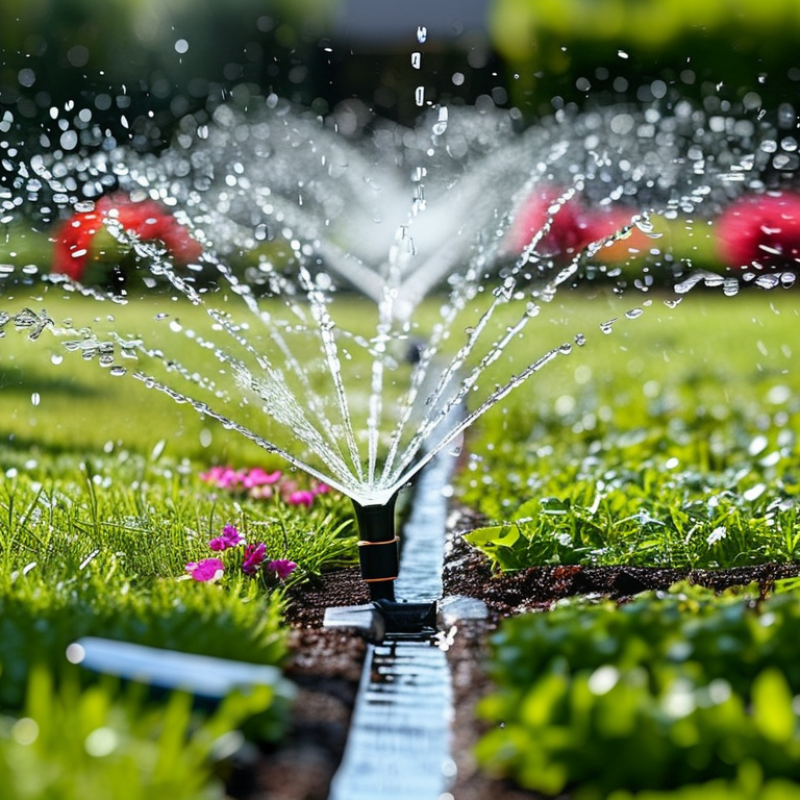
A garden sprinkler is a device that spreads water across soil and plants. It connects to a hose, then uses water pressure to drive its spray pattern. A nozzle divides the flow into droplets. Some models sweep from side to side. Others rotate, pulse, or spray in fixed circles.
Pressure matters. Low pressure creates weak coverage and dry patches. Excessive pressure can produce mist, causing faster evaporation. The U.S. Environmental Protection Agency’s WaterSense program reports that landscape irrigation can waste nearly 50% of supplied water through runoff, evaporation, and inefficient equipment. That figure makes sprinkler design more important than appearance.
The best garden sprinkler in 2026 should match the garden’s shape, soil, and water pressure. Oscillating systems suit rectangular lawns. Rotary systems usually work better around shrubs and irregular beds. Place several shallow containers across the area during a test. Water should collect evenly, not form puddles beside the hose. The Irrigation Association recommends checking distribution uniformity and adjusting schedules by weather and plant needs. A timer helps, but it cannot correct poor placement. My own testing is imperfect. Wind changed the spray distance, and one dry corner was easy to miss. WaterSense estimates that efficient irrigation controls can save thousands of gallons annually in typical homes, but actual savings depend on maintenance, soil, and local climate.
| Sprinkler Type | How It Works | Typical Coverage | Typical Flow Rate | Best Use | Main Advantages | Limitations |
|---|---|---|---|---|---|---|
| Oscillating Sprinkler | A row of small nozzles moves back and forth, creating a rectangular or square spray pattern. | Approximately 1,500–3,500 sq. ft. (140–325 m²) | Approximately 1,000–2,000 gallons per hour (3,785–7,570 L/h) | Medium-sized rectangular lawns and newly seeded grass | Even coverage, gentle spray, simple setup, and broad watering width | Coverage can be uneven in windy conditions; water use may be high |
| Rotary Gear-Drive Sprinkler | Internal gears rotate one or more streams of water through an adjustable arc or full circle. | Approximately 2,000–4,000 sq. ft. (185–370 m²) | Approximately 500–1,200 gallons per hour (1,893–4,542 L/h) | Large lawns and areas requiring longer-range watering | Lower precipitation rate, long throw distance, and good water distribution | Usually costs more and may require higher water pressure for proper rotation |
| Impact Sprinkler | A water-driven hammer arm repeatedly strikes the sprinkler head, rotating it around a circular or adjustable pattern. | Approximately 2,500–5,000 sq. ft. (230–465 m²) | Approximately 800–1,800 gallons per hour (3,028–6,814 L/h) | Large open lawns, fields, and areas with moderate to high water pressure | Long range, durable mechanism, and adjustable partial or full-circle coverage | Can be noisy; large droplets may cause runoff on compacted or sloped soil |
| Fan or Stationary Sprinkler | A fixed head sprays water in a constant fan-shaped or circular pattern without moving parts. | Approximately 500–1,500 sq. ft. (46–140 m²) | Approximately 600–1,500 gallons per hour (2,271–5,678 L/h) | Small lawns, narrow strips, and compact garden areas | Low purchase cost, easy operation, and minimal maintenance | Limited range and possible overwatering near the sprinkler head |
| Spot Sprinkler | A compact sprinkler delivers water to a small, fixed area through a simple spray pattern. | Approximately 100–500 sq. ft. (9–46 m²) | Approximately 200–700 gallons per hour (757–2,650 L/h) | Small flower beds, containers, vegetable patches, and dry spots | Easy to reposition and suitable for targeted watering | Requires frequent relocation for larger areas and may create uneven overlap |
| Soaker Hose | Water slowly seeps through porous hose walls along the length of the hose. | Approximately 25–100 sq. ft. per 25 ft. of hose (2–9 m² per 7.6 m) | Approximately 0.5–2 gallons per minute (1.9–7.6 L/min) | Vegetable rows, hedges, flower beds, and plants growing close together | Delivers water near the soil surface, reduces foliage wetting, and limits evaporation | Not ideal for lawns; pressure that is too high can cause uneven watering or hose damage |
| Drip Irrigation Emitter System | Pressure-regulated emitters release water slowly and directly into the root zone of individual plants. | Coverage depends on emitter spacing and tubing layout | Typically 0.5–2 gallons per hour per emitter (1.9–7.6 L/h) | Trees, shrubs, raised beds, containers, and water-conscious gardens | Highly efficient, precise, and effective at reducing evaporation and runoff | Installation is more involved; emitters and filters require periodic inspection |
| Traveling Sprinkler | Water pressure powers rotating wheels or gears that move the sprinkler along a hose path. | Approximately 10,000–13,500 sq. ft. (930–1,255 m²), depending on the route | Approximately 800–1,500 gallons per hour (3,028–5,678 L/h) | Very large lawns without permanent irrigation systems | Can cover large areas with limited manual repositioning | Needs a clear path, may leave unwatered gaps, and is unsuitable for steep or rough ground |
Performance figures are typical ranges rather than guarantees. Actual coverage and flow depend on water pressure, hose diameter, nozzle settings, terrain, wind, and sprinkler spacing. For efficient watering, apply water slowly enough to avoid runoff and aim to wet the root zone evenly.