Leave Your Message

China Top 10 Courtyard Sprinkler Manufacturers

Choosing a Courtyard Sprinkler manufacturer involves more than comparing prices or product photographs. Buyers need equipment suited to their garden layout, water pressure, and maintenance expectations. A small courtyard with flower beds may need different coverage from a paved patio with containers. The details matter.

This guide introduces ten manufacturers in China and offers a practical starting point for comparing their products. It considers factors such as sprinkler types, materials, coverage options, customization, technical documentation, and customer support. Where available, product specifications and company information can help readers assess each supplier more carefully. Still, published details may not answer every question. Requesting clear drawings, pressure requirements, warranty terms, and sample information can help fill the gaps.

A supplier’s fit depends on the project. A compact design may suit one property but perform poorly in another. Look closely at nozzle patterns and adjustability, especially around walls, paths, and delicate plants. Installation and local water conditions matter, too. They are easy to overlook.

The manufacturers featured here are not presented as a universal ranking of quality. Available product ranges and service capabilities can change, and a polished catalog is not proof of field performance. Compare claims with current documentation and discuss specific site requirements directly with each company. That extra check takes time. It can prevent costly mismatches and support a more informed purchasing decision.
China Top 10 Courtyard Sprinkler Manufacturers

What Defines a Courtyard Sprinkler and How Does It Work?

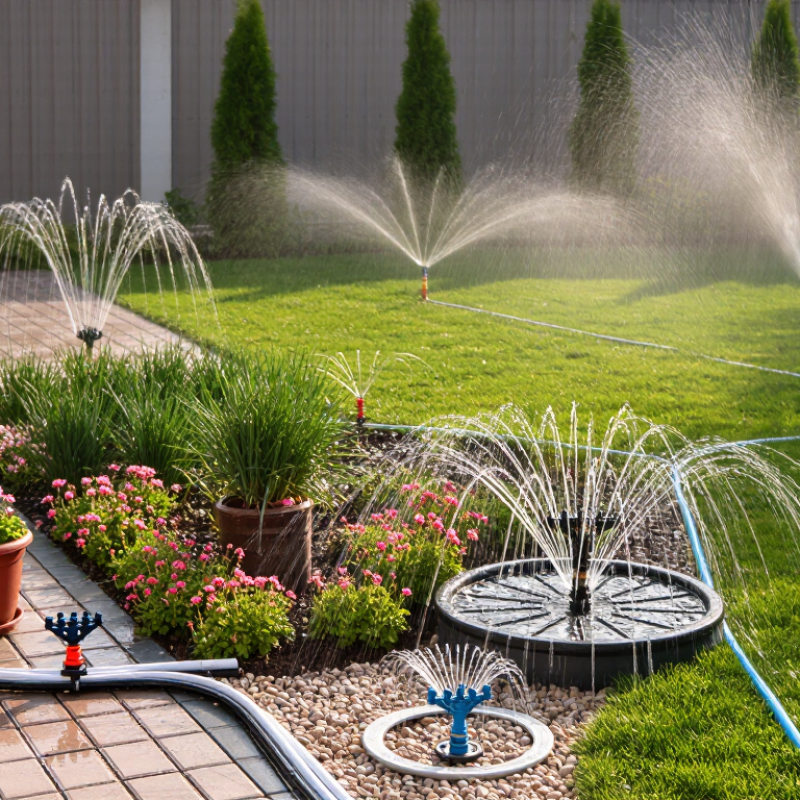
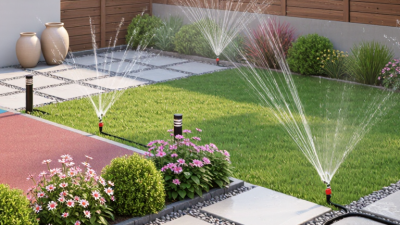
A courtyard sprinkler is a compact irrigation setup designed to water a small, often enclosed garden. It is not one standardized product. It may use fixed spray heads, rotating nozzles, or drip lines, depending on planting beds, paving, and available pressure. When a timer opens a valve, pressurized water travels through pipes and exits the emitters in a chosen pattern. A well-aimed spray should reach the soil, not the walls or the path. Simple detail. Wind and narrow corners can still cause uneven coverage.

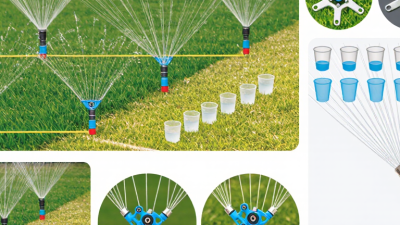
Control matters as much as the sprinkler head. EPA WaterSense reports that weather-based irrigation controllers can reduce irrigation water use by about 15% compared with conventional controllers, based on field studies summarized in its Weather-Based Irrigation Controllers guidance. That figure is not a promise for every courtyard: shade, soil, plant type, and leaks all change demand. A practical check is to place shallow cups around the yard during a short test cycle. If some cups stay dry while others overflow, adjust the head direction or run time before adding more equipment. It is easy to assume a small space needs little planning; that assumption deserves a second look.
How China’s Courtyard Sprinkler Manufacturing Market Is Organized

China’s courtyard sprinkler market is organized around a practical supply chain: plastic and metal component makers, irrigation-equipment assemblers, and export-oriented trading firms. Some factories mold nozzles and connectors in-house; others source valves, pumps, and timers from specialist suppliers. This division keeps entry costs manageable, but product quality can vary between batches. A threaded connector that fits one hose may leak on another.

Water efficiency shapes product design. China’s Ministry of Water Resources reported a farmland irrigation water-use efficiency coefficient of 0.572 in its 2022 China Water Resources Bulletin. The figure covers irrigation broadly, not courtyard sprinklers alone, but it shows why controlled water delivery matters. That matters. Buyers often compare spray radius, pressure range, nozzle adjustment, and resistance to clogging, rather than appearance alone. A small courtyard with uneven paving also needs different coverage from a rectangular lawn.

Manufacturers commonly serve domestic distributors, e-commerce sellers, and overseas importers, with OEM production often used for private-label orders. Export buyers may request samples and flow-rate tests before placing larger orders. However, published data rarely separates courtyard sprinklers from wider irrigation equipment categories. That leaves a real information gap. The China Water Resources Bulletin offers useful water-use context, but it cannot rank individual factories or verify their production capacity.

Criteria for Evaluating China’s Leading Courtyard Sprinkler Manufacturers

When assessing China’s leading courtyard sprinkler manufacturers, compare test evidence, not catalogue claims. U.S. EPA WaterSense reports that landscape irrigation uses nearly 9 billion gallons of water daily in the United States. That makes distribution uniformity and controllable flow practical priorities. Ask for test results showing coverage at stated pressure, nozzle size, and spacing. Check whether the manufacturer measures dry patches and overspray, not just total output. Small lawns reveal uneven coverage quickly.

Look closely at materials and production controls. UV exposure, mineral deposits, and repeated seasonal use can weaken plastic bodies or clog fine nozzles. Request material specifications, batch traceability, and documented leak and pressure tests. EPA WaterSense says labeled irrigation controllers can save an average home nearly 7,600 gallons annually; that figure concerns controllers, not sprinklers alone. It still shows why compatibility with timers and sensors matters. A sample that performs well in a factory may behave differently under wind or hard water. A caveat matters. Compare after-sales response times and replacement-part availability, then verify claims with a small field trial before ranking suppliers.

China Top 10 Courtyard Sprinkler Manufacturers - Criteria for Evaluating China’s Leading Courtyard Sprinkler Manufacturers

Evaluation framework for comparing manufacturers. The criteria below are designed to be assessed using product documentation, test reports, factory audits, and customer references; they do not represent a ranking of specific companies.

No. Evaluation Criterion Suggested Weight Evidence to Review Evaluation Considerations
1 Sprinkler performance and consistency 15% Flow-rate and operating-pressure data; distribution or coverage test results; inspection records Check whether performance is documented across the stated pressure range and whether samples perform consistently.
2 Materials and durability 14% Material specifications; corrosion, UV exposure, and cycle-test reports where applicable Assess suitability of plastics, metals, seals, and coatings for the intended water quality and outdoor conditions.
3 Range, adjustment, and installation compatibility 12% Product drawings; connection and thread specifications; adjustment instructions Verify that available spray patterns, adjustment options, and connections match the planned courtyard layout and irrigation system.
4 Quality management and traceability 12% Quality-system certificates, audit records, batch records, and corrective-action procedures Confirm certificate scope and validity, and check whether incoming materials and finished products can be traced by batch.
5 Product development and customization 10% Engineering resources; design-change process; prototype and tooling records Evaluate the ability to adapt specifications, packaging, or configurations while maintaining controlled product documentation.
6 Production capacity and process control 10% Process flow; equipment list; production and inspection records; capacity plans Check that stated output is supported by production resources and that critical manufacturing steps have defined controls.
7 Regulatory and market documentation 8% Applicable declarations, test reports, product labels, and destination-market documentation Confirm that documents apply to the exact product and target market; check any electrical or material requirements where relevant.
8 Supply reliability and lead-time management 7% Lead-time history; inventory practices; supplier-continuity and shipment records Compare confirmed delivery performance with quoted schedules and review arrangements for material shortages or demand changes.
9 After-sales support and warranty process 6% Written warranty terms; spare-parts policy; response and complaint-handling procedures Review warranty coverage, exclusions, replacement-part availability, and the process for resolving product issues.
10 Resource efficiency and environmental practices 6% Water-use performance data; material declarations; environmental management records where available Consider efficient water distribution and substantiated environmental claims; distinguish verified information from marketing statements.
Total Suggested Weight 100% Use the same evidence requirements and scoring scale for every manufacturer being compared.

Suggested scoring method: rate each criterion from 1 to 5, where 1 = limited or unverified evidence and 5 = strong, relevant, and independently verifiable evidence. Multiply each rating by its criterion weight to compare shortlisted manufacturers.

Profiles of 10 Notable Courtyard Sprinkler Manufacturers in China

China’s courtyard sprinkler sector includes manufacturers with different strengths, rather than one standard production model. A useful comparison can cover ten profiles: a mold-focused workshop, a brass-fitting specialist, a plastic rotor producer, a pop-up sprinkler maker, and a micro-sprinkler supplier. Each may suit a different courtyard layout. Small details matter. Check nozzle consistency, thread fit, and how easily the spray arc adjusts.

Other profiles include an OEM-oriented factory, an export-focused supplier, a company offering irrigation planning, a small-batch producer, and a broad-range manufacturer. These labels describe useful supplier types, not verified rankings. Ask for product drawings, material specifications, and sample units before comparing quotations. A short test on paving or lawn can reveal uneven coverage and overspray near walls.

Reliable profiles should explain their production scope clearly and distinguish in-house work from outsourced components. Request details on pressure range, water flow, UV resistance, and replacement parts. A neat catalogue is not proof of field performance. I would also check whether installation guidance matches the intended water supply; this step is easy to overlook. Some suppliers may have limited public test data, so state that uncertainty rather than assuming every model performs alike.

How to Compare Manufacturers by Product Range, Quality, and Service

China Top 10 Courtyard Sprinkler Manufacturers: How to Compare Product Range, Quality, and Service

A useful comparison starts with the courtyard itself. Measure the area, note narrow beds and paved corners, and check available water pressure. Then compare each manufacturer’s range: adjustable spray heads, fixed nozzles, connectors, filters, and replacement parts. A broad catalog matters only when its parts work together. Ask for flow-rate and coverage data, not just attractive product photos. A neat specification sheet can still leave gaps.

Quality claims need practical checks. Request material details and test records for pressure, leakage, and repeated adjustment. If possible, inspect a sample: turn the nozzle, check the thread fit, and look for uneven spray. Ask how products perform after sun and seasonal temperature changes. These checks cannot predict every installation, and a sample may not represent every production batch. That limitation is worth remembering. Service is equally tangible: compare response times, technical guidance, spare-part availability, and warranty terms in writing.

Tips: Send the same site plan and water-pressure details to every supplier. Ask each to recommend a layout and explain its assumptions. Compare the answers side by side. If a reply is vague, ask again; clear communication is part of product quality.