Leave Your Message

What Is the Best Agricultural Water Sprinkler?

Choosing the best Agricultural Water Sprinkler is not simply a matter of buying the newest model. Soil texture, crop height, wind exposure, water pressure, and field shape all affect performance. A sprinkler that works well on flat loam may waste water on sandy soil or uneven ground. Small details matter. Droplet size matters.

The Food and Agriculture Organization’s AQUASTAT database reports that agriculture accounts for roughly 70% of global freshwater withdrawals. The figure varies by region, but the pressure is clear. The USDA’s 2018 Farm and Ranch Irrigation Survey also recorded about 55.9 million irrigated acres in the United States. These figures explain why uniform application, measurable efficiency, and dependable maintenance deserve more attention than advertising claims.

John Farner, a former Irrigation Association chief executive and irrigation industry specialist, has expressed the core principle this way: “The right amount of water, at the right time, in the right place.” That sounds simple. Field conditions rarely are. A center pivot, impact sprinkler, traveling gun, or low-pressure spray system can each be the right choice under different conditions. Yet performance can decline when nozzles clog, pressure fluctuates, or wind pushes droplets beyond the crop zone. This guide compares the main Agricultural Water Sprinkler options through efficiency, coverage, durability, operating cost, and practical field experience. The analysis is not perfect. Local measurements should challenge every general recommendation.
What Is the Best Agricultural Water Sprinkler?

Agricultural Water Sprinklers: Purpose, Types, and Key Features

Agricultural Water Sprinklers: Purpose, Types, and Key Features

Agricultural sprinklers apply water as controlled droplets across fields, orchards, and nursery beds. They reduce manual watering and support more uniform crop growth. The need is substantial. FAO’s AQUASTAT reports that agriculture accounts for about 70% of global freshwater withdrawals.

That figure makes application accuracy more than a convenience.

Sprinkler types suit different field conditions. Impact sprinklers work well on open fields and uneven plots. Center pivots cover large, regular areas with predictable movement. Linear-move systems suit long rectangular fields.

Micro-sprinklers deliver gentle water beneath tree canopies, helping reduce leaf wetting. Solid-set systems provide flexible coverage for vegetables and changing crop layouts. No single type is best everywhere.

Key features include flow-rate control, pressure regulation, filtration, corrosion resistance, and reliable nozzle spacing. Wind drift matters. A fine mist may disappear before reaching the soil.

USDA Natural Resources Conservation Service guidance commonly places sprinkler application efficiency around 70% to 85%, depending on design, operation, and weather.

Better results require pressure checks, matched nozzles, and irrigation scheduling based on soil moisture. Field inspections often reveal dry strips beside wet patches. That imperfection is easy to miss. It also shows why equipment selection should follow field measurements, not catalog claims. I would compare measured distribution uniformity, energy use, maintenance access, and seasonal labor before choosing a system.
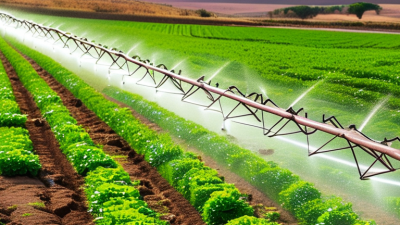
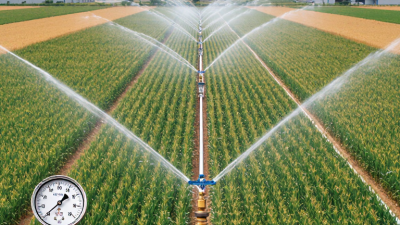
How Different Sprinkler Systems Distribute Water

What Is the Best Agricultural Water Sprinkler?

How Different Sprinkler Systems Distribute Water

Agricultural sprinklers do not distribute water in the same way. An impact sprinkler throws water in a circular pattern, creating larger droplets that can travel across open fields. Its coverage depends on nozzle size, operating pressure, wind, and spacing. In dry, breezy conditions, some water may drift beyond the crop rows.

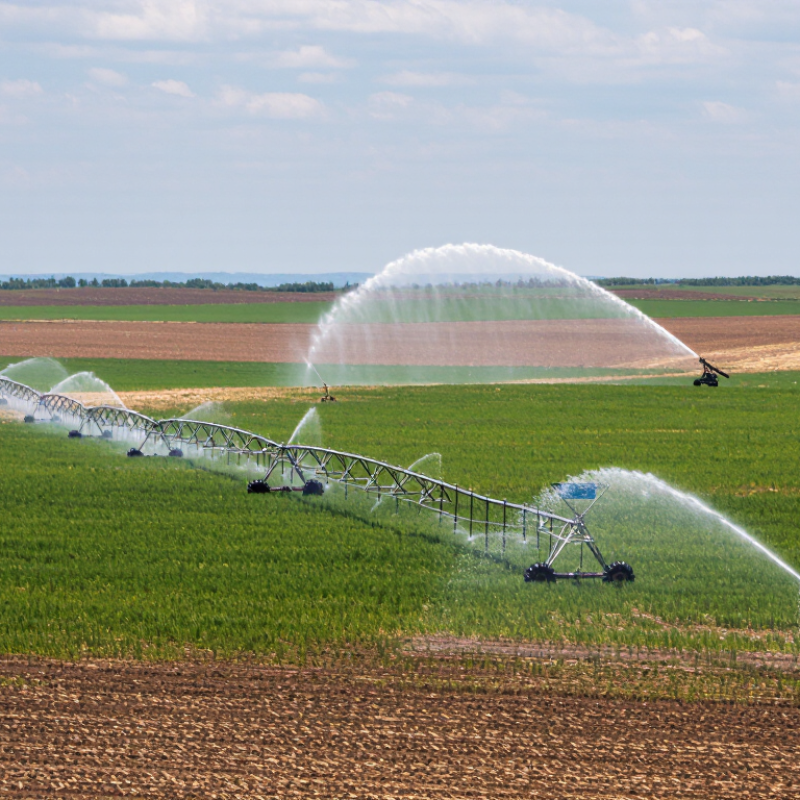
Center-pivot systems move slowly around a fixed point and apply water through many outlets. Their outer spans cover larger areas, while inner spans travel less distance and need different application rates. Well-designed systems use pressure regulators and carefully selected nozzles to maintain fairly even coverage. Still, worn nozzles can create dry strips. Small errors matter.

Traveling sprinklers distribute water along a planned path, making them useful for irregular fields. However, application rates may change when the machine slows or the terrain rises. Low-pressure spray systems produce larger droplets near the soil surface, reducing wind loss in some conditions. They can also increase runoff on compacted ground.

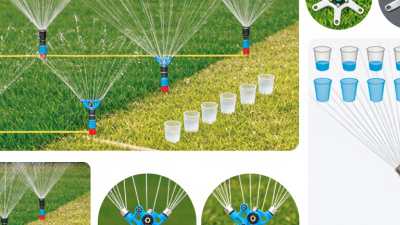
Farm managers should check distribution with catch cans placed across the irrigated area. Measuring the collected water reveals patterns that a quick visual inspection misses. Soil texture also matters; sandy soil accepts water quickly, while clay soil may need shorter cycles. No system is perfect. Rechecking pressure, nozzle wear, and wind conditions remains necessary.

Choosing the Best Sprinkler for Crops and Field Conditions

What Is the Best Agricultural Water Sprinkler?

The best sprinkler depends on the crop, soil, wind, and available pressure. FAO AQUASTAT reports that agriculture uses about 70% of global freshwater withdrawals. That figure makes selection a resource decision, not a hardware preference. For low-growing vegetables on level, sandy soil, a fine, uniform spray can support shallow root zones. Heavy clay needs slower application. Otherwise, runoff appears before infiltration.

Field conditions change the answer. The USDA NRCS Irrigation Guide identifies pressure, nozzle spacing, precipitation rate, and soil intake rate as key design variables. In windy fields, larger droplets and lower operating heights usually reduce drift. Tall crops may need higher-clearance risers or rotating impact patterns. Check the gauge at the farthest sprinkler, not only near the pump. Small pressure losses can create visibly dry strips.

Water quality deserves attention. Suspended sand can wear nozzles, while mineral deposits distort spray patterns. A basic catch-can test across the field can expose poor uniformity. Compare collected depths after one operating cycle. ASABE irrigation standards emphasize distribution uniformity and measured performance, yet field measurements are often skipped. That shortcut is expensive. No chart replaces a field walk. A “best” sprinkler may still fail when spacing ignores slope, shifting wind, or changing crop height. Recheck after installation, because real fields rarely behave like the design sheet.

What Is the Best Agricultural Water Sprinkler?

Choosing the best sprinkler depends on crop type, field size, terrain, wind conditions, and the required water-use efficiency. The chart compares representative field-scale application-efficiency values for common agricultural sprinkler systems.

Higher application efficiency means less water is lost through evaporation, runoff, and wind drift. Micro-sprinklers are generally effective for orchards and high-value crops, while center-pivot and linear-move systems are widely suited to large, relatively level fields. Actual performance varies with nozzle design, pressure, maintenance, soil, and weather.

Installation, Operation, and Maintenance Guidelines

What Is the Best Agricultural Water Sprinkler?

Installation, Operation, and Maintenance Guidelines

A reliable agricultural sprinkler begins with a careful site inspection. Check soil type, field slope, water quality, and available pressure before choosing equipment. A pressure gauge should sit near the main valve for accurate readings. Install the pipeline on stable ground, and support joints to prevent strain. Flush every pipe before attaching sprinkler heads. Small stones can block nozzles quickly. Keep spacing consistent, but adjust it for wind and crop height. Local water regulations may also require backflow protection.

Operate the system during low-wind periods, usually early morning. Confirm that each sprinkler produces a similar spray pattern. Place collection cups across the field and compare water depth after one test cycle. Uneven results often reveal poor pressure, clogged screens, or incorrect spacing. Avoid long cycles that create runoff. Shorter applications may improve absorption on compacted soil. Soil moisture checks should guide the schedule, not habit alone.

Maintenance needs a written routine. Inspect filters, seals, valves, and nozzle openings every week during active use. Remove deposits with suitable cleaning methods, and never force a blocked nozzle with wire. Check for leaks after restarting the system. I have seen one loose fitting waste water for days before anyone noticed. That mistake was preventable. Keep records of pressure, weather, repairs, and irrigation duration. Replace damaged parts promptly, although replacing every component too early can waste money. Seasonal storage should include draining exposed lines and protecting equipment from freezing temperatures.

What Is the Best Agricultural Water Sprinkler? - Installation, Operation, and Maintenance Guidelines

Category Sprinkler or Guideline Typical Data Recommended Application
Selection Impact sprinkler Typical operating pressure: 2.0–5.0 bar; approximate wetted diameter: 20–40 m Suitable for field crops, pasture, orchards, and relatively large open areas where long throw distance is useful.
Selection Gear-drive or rotary sprinkler Typical operating pressure: 2.5–5.5 bar; approximate wetted diameter: 15–35 m Useful where uniform rotation, moderate application rates, and reduced mechanical exposure are desired.
Selection Center-pivot sprinkler package Typical application rate: about 5–15 mm/h, depending on nozzle package and travel speed Best for large, relatively level fields requiring automated and repeated irrigation.
Selection Low-pressure spray sprinkler Typical operating pressure: 1.0–2.5 bar; lower discharge than high-pressure systems Appropriate where pumping energy must be reduced and wind exposure is moderate.
Selection Micro-sprinkler Typical operating pressure: 1.0–2.5 bar; approximate discharge: 20–150 L/h per unit Well suited to orchards, nurseries, vegetables, and localized irrigation beneath or between plants.
Water efficiency Sprinkler irrigation efficiency Typical field application efficiency: approximately 60–85% Actual performance depends on wind, pressure regulation, nozzle condition, overlap, evaporation, and soil infiltration.
Layout Sprinkler spacing Common spacing is 50–65% of the measured wetted diameter Use closer spacing in windy conditions or where high distribution uniformity is required; follow the tested manufacturer pattern for the selected nozzle.
Layout Pressure uniformity Keep operating pressure within the sprinkler’s recommended range; avoid pressure variation greater than approximately 20% across a zone Use pressure regulators, correctly sized pipes, and pressure gauges at the pump and at the far end of each irrigation zone.
Installation Pipe and riser installation Install laterals level where possible; support risers vertically and protect connections from movement Flush pipes before installing nozzles, bury permanent lines below the local frost or cultivation depth, and prevent sharp bends.
Installation Filtration Use filtration appropriate to the smallest nozzle passage; clean filters when differential pressure reaches the filter manufacturer’s service limit A filter is especially important when using surface water, micro-sprinklers, or small-orifice nozzles.
Operation Application rate Apply water more slowly than the soil infiltration rate; common agricultural sprinkler rates range from about 5–25 mm/h Reduce runoff by using smaller nozzles, shorter cycles, or multiple irrigation events on heavy or compacted soils.
Operation Irrigation timing Early morning, evening, or nighttime generally reduces evaporative loss compared with hot, dry, windy periods Avoid prolonged leaf wetness when disease risk is high, and avoid irrigation during strong winds whenever possible.
Operation Wind management Wind speeds above approximately 10–15 km/h can significantly reduce sprinkler uniformity Use closer spacing, lower trajectory nozzles, windbreaks, or a different irrigation time in exposed fields.
Operation Scheduling method Base irrigation on crop evapotranspiration, soil moisture, root-zone depth, and effective rainfall Avoid fixed schedules throughout the season; adjust run time as crop demand, weather, and soil moisture change.
Maintenance Nozzle and sprinkler inspection Inspect at least monthly during the irrigation season; check for clogging, wear, leakage, and irregular rotation Replace worn or damaged nozzles in matched sets where practical, because enlarged orifices can increase discharge and reduce uniformity.
Maintenance System flushing Flush mainlines, submains, and laterals at the beginning of the season and whenever sediment or biological growth is observed Open the line ends safely until discharge water is visibly clear; then reinstall end caps and check for leaks.
Maintenance Performance testing Measure pressure and collect catch-can samples at representative points at least once per season Investigate dry areas, excessive runoff, pressure loss, or large differences in collected water before changing the irrigation schedule.
Winterization Cold-weather protection Drain exposed pipes, pumps, valves, and sprinkler bodies before freezing conditions Store removable sprinklers and nozzles in a clean, dry location and repair damaged components before the next season.
Best choice Overall recommendation There is no single best sprinkler for every farm Choose the system that matches crop type, field size, soil infiltration rate, water quality, terrain, available pressure, wind conditions, labor, and energy cost.

Water Efficiency, Cost, and Long-Term Performance Comparison

What Is the Best Agricultural Water Sprinkler?

Water Efficiency, Cost, and Long-Term Performance Comparison

The best agricultural sprinkler is not automatically the one with the lowest purchase price. It should apply water evenly across the crop area, even under changing field conditions. In practical irrigation assessments, distribution uniformity matters more than spray distance alone. Uneven coverage can leave dry plants beside waterlogged soil. That wastes water, fertilizer, labor, and energy. A useful field test places small collection containers across the irrigated zone. After one cycle, the collected volumes reveal weak coverage more clearly than appearance.

Operating cost deserves close attention. A sprinkler using excessive pressure may produce a fine spray, but pumping electricity can rise sharply. Wind can also carry small droplets beyond the root zone. Larger, heavier droplets often perform better in breezy conditions, although they may increase soil compaction. Flow rate, pressure, spacing, and crop height must be evaluated together. There is no universal setting.

Long-term performance depends on maintenance and water quality. Sediment can block small openings, while mineral deposits may change spray patterns. Inspecting filters, seals, and rotating parts during the season prevents minor faults from becoming expensive failures. A practical comparison should include replacement parts, cleaning time, energy use, and expected service life. My initial mistake was focusing too heavily on water savings alone. A slightly cheaper system may demand more repairs and create uneven growth. Field records, pressure readings, and seasonal crop results provide stronger evidence than advertising claims.