Leave Your Message

What Are the Best Garden Sprinkler Types in 2026?

Choosing a Garden Sprinkler in 2026 is less about buying the most powerful model and more about matching coverage to your yard. The U.S. Environmental Protection Agency’s WaterSense program estimates that outdoor use accounts for about 30% of household water use in the United States. It also warns that as much as half of outdoor water can be lost through evaporation, runoff, and wind. That makes sprinkler type, placement, and adjustment practical concerns—not small details.

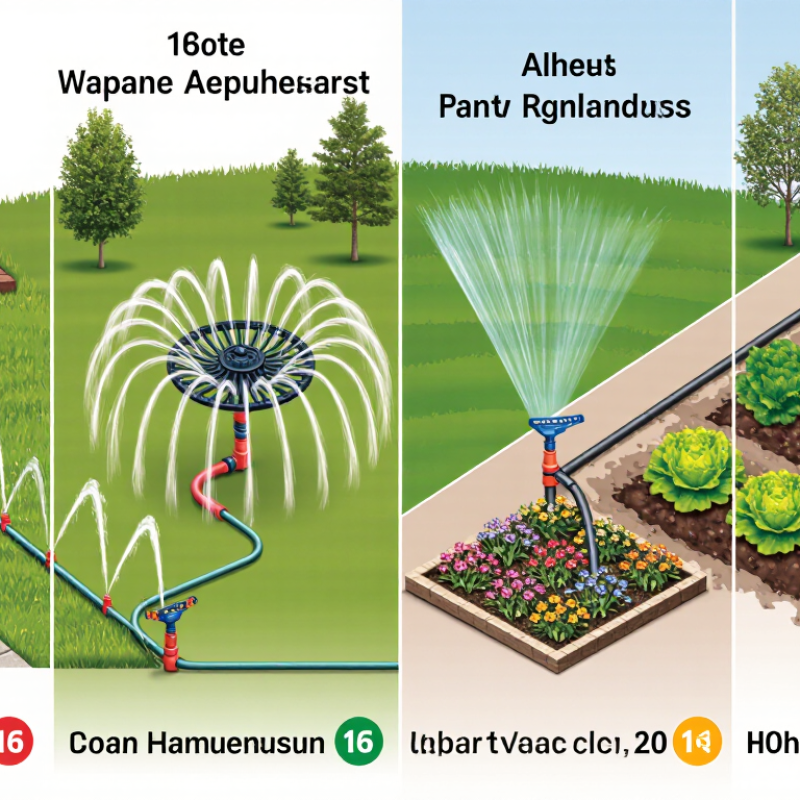
Small differences matter. Oscillating sprinklers can cover rectangular lawns, while rotary models suit broader areas and adjustable stationary heads work well for compact beds. Drip irrigation can be a better fit for rows of plants, where spraying leaves and paths wastes water. University of Florida irrigation researcher Michael D. Dukes studies how irrigation choices affect water use. A practical paraphrase of his research-based guidance is: “Match irrigation to the landscape’s needs, rather than relying on a fixed routine.” This is a paraphrase, not a verbatim quotation.

There is no universal winner. A windy, sloped lawn may need a different setup from a sheltered vegetable patch. Check the spray pattern on a dry day; look for puddles, missed corners, and water landing on pavement. Then compare coverage, adjustability, durability, and compatibility with a timer. The best choice is the one that waters the intended plants evenly, with minimal runoff. This guide compares common sprinkler types and explains where each tends to perform well—and where it may disappoint.
What Are the Best Garden Sprinkler Types in 2026?

How Sprinkler Coverage Works: Use Head-to-Head Spacing for Even Watering

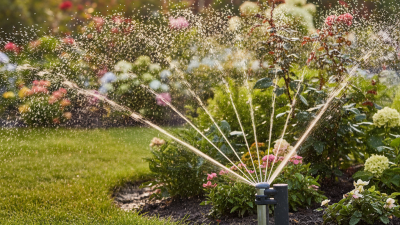
Even watering depends on overlap, not on how far a sprinkler can spray. With head-to-head spacing, each sprinkler’s stream reaches the next sprinkler head. This creates overlapping coverage and helps prevent dry strips between watering zones. It may look like too much water. It usually isn’t.

Spray heads often suit small, regular beds, while rotary heads can cover larger areas with slower-moving streams. Check the stated radius, then space heads so neighboring spray reaches each head; do not rely on the maximum distance alone. A square layout is straightforward for rectangular lawns. Triangular spacing can improve overlap in open areas, though it takes more careful measuring. Keep in mind that wind, water pressure, and plants can change the actual pattern. A sprinkler that reaches the sidewalk in still air may fall short on a breezy day.

Before digging, place temporary markers at the planned head locations and run the system. Look for pale or dry patches, especially near corners and along edges. Adjust the spacing or nozzle direction, then check again. I’d also recheck after plants grow; foliage can block spray in ways a paper plan won’t show. Use the sprinkler’s coverage chart as a starting point, not a guarantee.
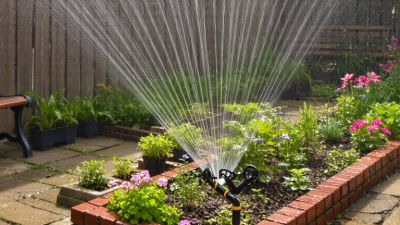
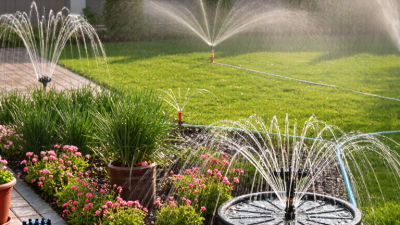
Typical Sprinkler Throw Radius and Head-to-Head Spacing

Planning ranges vary by model, pressure, and conditions. For even coverage, space heads no farther apart than the throw radius of a head—not its full diameter. Check the manufacturer’s specifications for your sprinkler and adjust for wind and site conditions.

Spray Heads: Typical 1.5–2.0 in/hr Rates Fit Small, Regular Beds

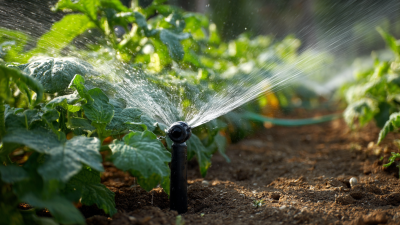
Spray heads suit small, regularly shaped garden beds because they cover predictable areas with a steady fan of water. Their typical precipitation rate is about 1.5–2.0 inches per hour, though nozzle choice, pressure, and spacing can change the actual rate. That is relatively fast. A compact bed may receive enough water in a short run, but heavy or compacted soil can struggle to absorb it. Watch for puddles along the bed’s edge.

The rate is a guide, not a guarantee. Place a few straight-sided catch cups around the bed and run the system for a set time; comparing the collected water can reveal dry corners or uneven coverage. If water begins running toward the path, try shorter cycles with pauses between them. This takes more adjustment. I would not assume every spray head delivers the same amount, even when the bed looks evenly wet. Check the soil beneath the surface, too: a damp top layer can hide dry roots, while frequent watering may leave deeper soil soggy.

What Are the Best Garden Sprinkler Types in 2026? - Spray Heads: Typical 1.5–2.0 in/hr Rates Fit Small, Regular Beds
Sprinkler type Typical precipitation rate Coverage pattern Best suited to Practical considerations
Fixed spray head About 1.5–2.0 in/hr Fan-shaped spray; common quarter-, half- and full-circle patterns Small, regular-shaped beds and narrow lawn areas Waters quickly. Use matched heads and suitable spacing to reduce dry spots and runoff.
Adjustable spray head Often similar to fixed spray heads; commonly around 1.5–2.0 in/hr Adjustable arc, typically for part-circle coverage Small beds with curved edges or nearby paths and walls Arc adjustment helps limit overspray; actual output depends on nozzle, pressure and setting.
Strip-pattern spray head Often around 1.5–2.0 in/hr; check the specific nozzle data Long, narrow rectangular or side-strip pattern Long, narrow planting beds and lawn strips Position and align carefully so the strip is watered evenly without wetting hard surfaces.
Rotary-nozzle spray head Commonly about 0.4–0.8 in/hr, depending on the nozzle and layout Several rotating streams; available in different arcs and radii Small or medium areas where a slower application rate is useful Usually applies water more slowly than conventional spray heads; do not mix in the same zone unless application rates are matched.
Gear-driven rotor Often about 0.4–1.0 in/hr, depending on nozzle, spacing and pressure Rotating stream over a longer radius Larger, open lawns or broad planting areas Generally less suitable for tiny beds. Adequate spacing and matched precipitation rates are important.
Drip irrigation Emitter flow is usually specified in gallons per hour, not in/hr Water delivered near plant roots through emitters or tubing Vegetable beds, rows, containers and water-sensitive planting areas Output over a given area depends on emitter flow, spacing, soil and run time; it is not directly comparable to sprinkler in/hr rates.
Oscillating sprinkler Varies widely by model, water pressure and adjustment Back-and-forth rectangular spray Temporary watering of rectangular lawns or garden plots Easy to reposition, but wind and changes in pressure can affect coverage and distribution.
Note: Precipitation rates are indicative ranges, not guaranteed outputs. Actual performance varies with nozzle design, operating pressure, spacing and site conditions. For an in-ground zone, use sprinklers with compatible application rates and aim for overlapping coverage.

Rotors and Rotary Nozzles: Typical 0.4–1.0 in/hr Rates Suit Lawns

Rotors and rotary nozzles usually apply water more slowly than fixed spray heads. Utah State University Extension’s landscape-irrigation guidance places rotary sprinkler rates around 0.5–1.0 inches per hour, consistent with the typical 0.4–1.0 range. That slower delivery suits lawns because water has more time to soak into the root zone. It can also reduce runoff on gentle slopes. Not always. Compacted soil may still shed water, even at a modest rate.

The published rate is a starting point, not a promise about your yard. Pressure, nozzle choice, spacing, and wind all affect how much water reaches the grass. The Irrigation Association’s landscape-auditing guidance recommends catch-can tests to measure application in place; ASABE standard S398.1 sets procedures for testing and reporting sprinkler performance. Set identical cups across a lawn, run the system for a measured period, then compare their collected depths. Uneven amounts may reveal poor spacing or pressure problems. I’ve seen a tidy schedule look convincing on paper, yet leave dry crescents beside a walkway. Adjust run times to the measured rate, and inspect the lawn after watering. Some guesswork remains, especially where shade and soil vary.

Impact Sprinklers: Compare Rated Radius, Flow, and Wind Performance

Impact sprinklers suit open lawns and long, narrow beds. Compare rated radius and flow at the same operating pressure; otherwise, the figures can mislead. A sprinkler rated for a 12-metre radius may cover less when pressure drops or wind pushes the spray. Check the nozzle size and stated flow, usually measured in litres per minute. Higher flow is not automatically better. Your water supply and soil absorption matter, too.

Tips: Test on a calm morning. Place small cups at several distances, then run the sprinkler for 15 minutes. Uneven water tells you more than a catalogue figure. Keep notes.

Wind performance depends on droplet size, arc, and pressure, so no single rating guarantees an even pattern outdoors. Impact sprinklers make a distinct ticking sound and rotate in steps; that motion can distribute water across a broad area, but exposed edges may still dry out. I have found that a slight overlap between neighboring spray patterns helps, though it can take a few adjustments. Avoid judging coverage after one run. Check the farthest cups, watch for puddles near the sprinkler, and adjust spacing before changing the nozzle.

Choose for Water Efficiency: EPA Estimates Smart Controllers Save ~7,600 gal/year

A smart sprinkler controller can make a bigger difference than changing sprinkler heads alone.

The EPA estimates that a WaterSense-labeled irrigation controller can save an average home about 7,600 gallons of water each year. That figure is an estimate, not a promise; results depend on climate, yard size, and existing watering habits.

Still, it gives homeowners a useful benchmark. A controller that adjusts watering for local weather can skip a cycle after rain instead of soaking already-wet soil.

Match the sprinkler type to the space. Rotor sprinklers suit larger lawns, while fixed spray heads can work for compact, regularly shaped areas. Drip lines are often a better fit for garden beds, where water can reach plant roots with less overspray.

Small details matter: check that spray does not hit a driveway, and look for soggy patches near head locations. Set watering for cooler morning hours, then review the schedule as the season changes.

It may take a few adjustments. Even a smart system cannot correct a leaking head or poor coverage, and I would not assume one setting fits every bed. A quick monthly inspection helps catch problems early.