Best Garden Sprinkler Head Types for Your Lawn Care Needs
When it comes to proper lawn care, selecting the right Garden Sprinkler Head is crucial. According to a report by the Irrigation Association, efficient water usage can reduce consumption by up to 30%. This highlights the importance of choosing the best sprinkler head for your specific needs. Industry expert Dr. Emily Green stresses this point, stating, "A suitable sprinkler head can dramatically enhance water distribution and promote healthier lawns."
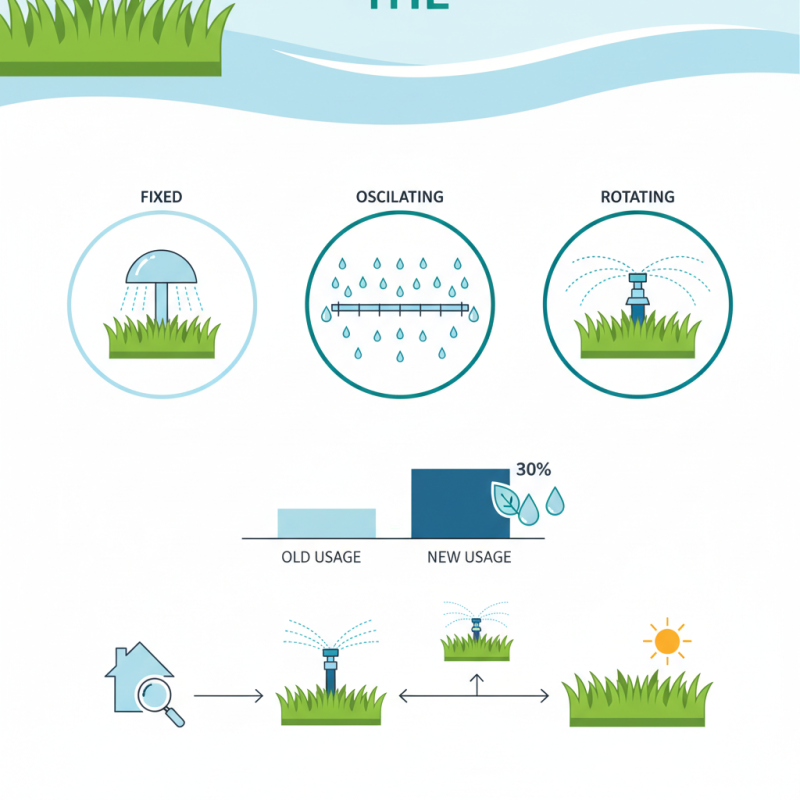
Different garden sprinkler head types serve various purposes. Fixed, oscillating, and rotating sprinkler heads each provide unique benefits. For instance, rotating heads offer even coverage for larger areas, while fixed heads work well for smaller spaces. Yet, many homeowners overlook their specific lawn needs. This oversight can lead to uneven watering and dead patches.
Understanding your garden's requirements is essential. The right Garden Sprinkler Head not only maximizes efficiency but also improves your lawn's overall health. As we delve deeper into the various types of sprinkler heads and their applications, you'll find that a little research can make all the difference. Choosing wisely is an investment in your lawn's future.
Types of Sprinkler Heads: An Overview for Lawn Care
When it comes to lawn care, choosing the right sprinkler head is crucial. There are several types available, each serving different needs. For instance, oscillating sprinkler heads provide a fan-like spray pattern, ideal for small to medium lawns. According to industry reports, these can cover up to 3,200 square feet effectively.
Rotary sprinkler heads are another option. These rotate to deliver a precise spray, suitable for large areas. They can distribute water evenly, which is essential for preventing dry patches. However, some users find that adjusting them can be tricky at times.
**Tips:** Remember to check the water pressure. Proper pressure ensures the sprinkler works effectively. Also, consider your lawn's unique shape and size before making a choice. Test different types to see which one suits your needs best. Ultimately, the right sprinkler can make your lawn look lush and vibrant.
Best Garden Sprinkler Head Types for Your Lawn Care Needs
This chart provides an overview of the various types of garden sprinkler heads and their respective effectiveness in covering lawn areas. The data represents the average coverage area in square feet for each type of sprinkler head.
Comparing Fixed and Adjustable Sprinkler Heads for Best Performance
When it comes to lawn care, choosing the right sprinkler head can make a significant difference. Fixed and adjustable sprinkler heads each have their unique traits. Fixed heads are simple and easy to install. They only cover a specific area consistently. This makes them ideal for small gardens or defined flower beds. However, they lack flexibility. If your lawn layout changes, fixed heads might require replacement.
Adjustable sprinkler heads offer more versatility. They allow you to change the spray pattern or distance. This can adapt to various lawn shapes and plant necessities. You can target dry areas without wasting water. Still, they can be more complex to set up. Adjusting them can sometimes lead to uneven coverage, especially if not done correctly. Inadequate adjustment may leave some areas dry and others oversaturated. It's essential to monitor their performance over time. You might find that your initial settings need refinements. The right choice often depends on your lawn's specific needs and layout.
Choosing the Right Sprinkler Head based on Lawn Size and Layout
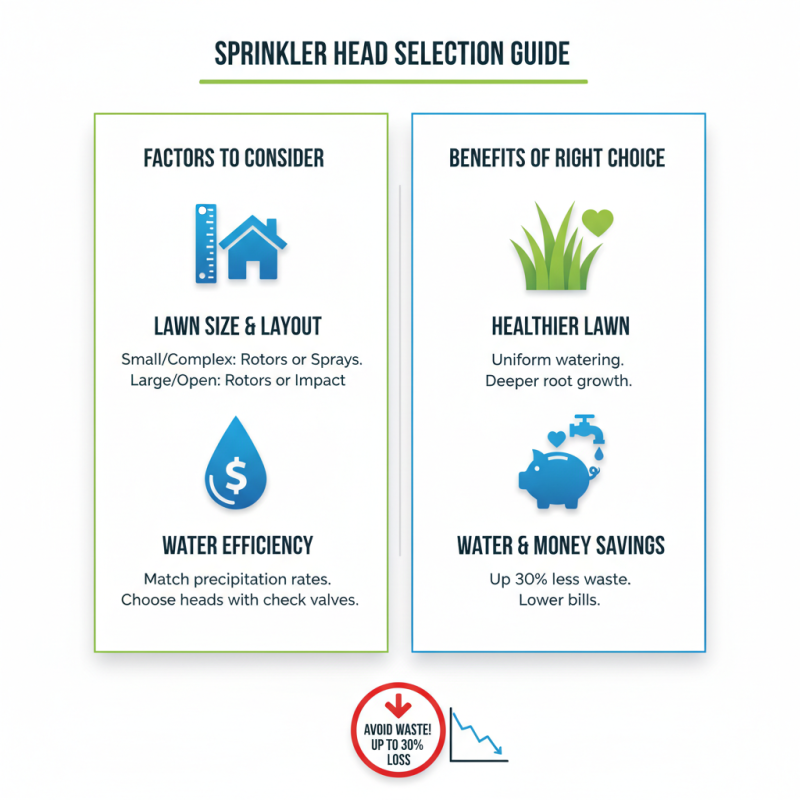
Choosing the right sprinkler head is crucial for effective lawn care. Lawn size and layout play significant roles in this decision. A well-thought-out choice can lead to more uniform watering, healthier grass, and savings on water bills. According to industry studies, improper sprinkler selection can waste up to 30% of water.
For small, irregularly shaped lawns, gear-driven rotors or oscillating sprinklers are often the best choice. They provide adjustable spray patterns, allowing you to reach every corner. In contrast, larger lawns benefit from impact sprinklers, known for their longevity and coverage. They can water extensive areas efficiently. The 2022 Irrigation Association report noted that homeowners often underestimate the effect of mismatched sprinkler types on water distribution.
Reflection is needed here. Many people choose sprinklers based on price rather than suitability. This can lead to uneven coverage and dry patches. Moreover, landscaping features like flower beds or trees require special consideration. A standard sprinkler may not reach these areas effectively. Taking the time to analyze your lawn's specific needs can yield better results.
Understanding the Benefits of Rotary vs. Spray Sprinkler Heads
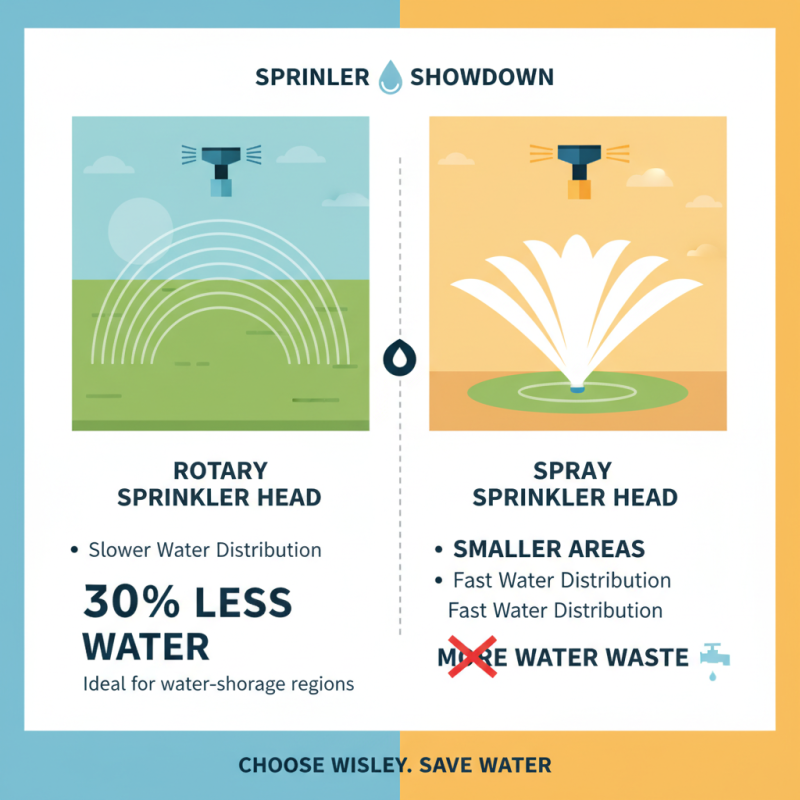
When choosing between rotary and spray sprinkler heads, understanding their benefits is key. Rotary sprinkler heads provide a slower water distribution. They cover larger areas, making them efficient for sprawling lawns. According to a recent industry report, rotary systems can reduce water usage by 30% compared to traditional spray heads. This efficiency is crucial in regions facing water shortages.
In contrast, spray sprinkler heads deliver a quick burst of water over smaller areas. They are ideal for flower beds and gardens. However, they may waste water due to evaporation and wind drift. Studies suggest that spray heads can lead to up to 20% water loss in dry conditions. Evaluating the specific needs of your landscape is essential before deciding.
**Tip:** Always adjust your sprinkler heads to the right pressure. This simple step can enhance performance and save water. Checking for clogs regularly can prevent uneven watering. Also, consider setting your watering schedule during the cooler parts of the day to minimize evaporation.
Factors to Consider When Installing Sprinkler Heads for Efficiency
When installing sprinkler heads, efficiency is key. Various factors play a significant role in ensuring your lawn receives the right amount of water. According to the Irrigation Association, 50% of water used in residential areas is for landscapes. Improperly installed systems waste water and can lead to high bills.
Choosing the right type of sprinkler head is crucial. Fixed heads work great for smaller areas, while rotating and impact heads cover larger spaces more evenly. A misalignment of just a few degrees could lead to dry patches or overwatering, both of which are problematic. A 2019 report from the EPA stated that inefficient systems can result in up to 30% water loss.
Additionally, consider the timing and duration of watering. Many homeowners water during the hottest part of the day, leading to significant evaporation losses. Ideally, watering should occur early in the morning or late in the evening. Installing a rain gauge may also help, as it can prevent unnecessary watering after significant rainfall. Reflecting on these points can greatly improve your lawn care.
Best Garden Sprinkler Head Types for Your Lawn Care Needs
| Sprinkler Head Type |
Coverage Area (sq ft) |
Water Pressure (PSI) |
Ideal Use |
Adjustability |
| Fixed Sprinkler |
100 |
20-30 |
Small Gardens |
No |
| Oscillating Sprinkler |
400 |
25-40 |
Lawns |
Yes |
| Rotary Sprinkler |
1000 |
30-50 |
Large Gardens |
Yes |
| Drip Irrigation |
Variable |
Low |
Flower Beds |
No |
| Impact Sprinkler |
1500 |
30-60 |
Large Areas |
Yes |