Why choose a Splitter Hose when global buyers have so many connection options? The answer often begins with practical installation needs. A splitter hose can divide one water supply into two controlled outlets. This helps connect washing machines, garden equipment, filters, or compact irrigation systems. In a crowded utility room, fewer adapters can mean less clutter and faster maintenance.
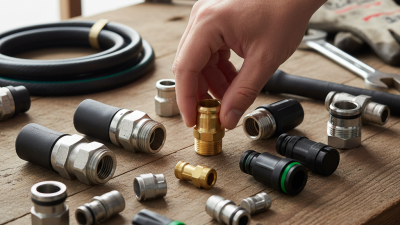
However, the right product depends on more than appearance. Experienced buyers check hose diameter, thread size, working pressure, temperature range, and connector material. They also review sealing performance and packaging quality before placing larger orders. A stainless-steel braid may improve external protection, while reinforced PVC can offer flexibility and lower handling weight. Every specification matters.
Small details matter.
Reliable suppliers should provide clear technical sheets, inspection records, sample approval, and traceable batch information. Buyers may also request pressure testing before shipment. This process supports consistent quality across different markets and installation conditions. Still, no Splitter Hose fits every project. A product designed for household water may not suit demanding industrial service. That distinction is easy to overlook.
I have found that real value appears during installation, not only during price comparison. A hose that twists easily, seals cleanly, and includes compatible washers can reduce delays. Yet supplier claims should never replace independent evaluation. Testing a sample under realistic pressure remains a wise step. Global purchasing involves uncertainty, and even careful specifications can miss field conditions. Careful review, honest feedback, and ongoing supplier communication create a more dependable buying decision.
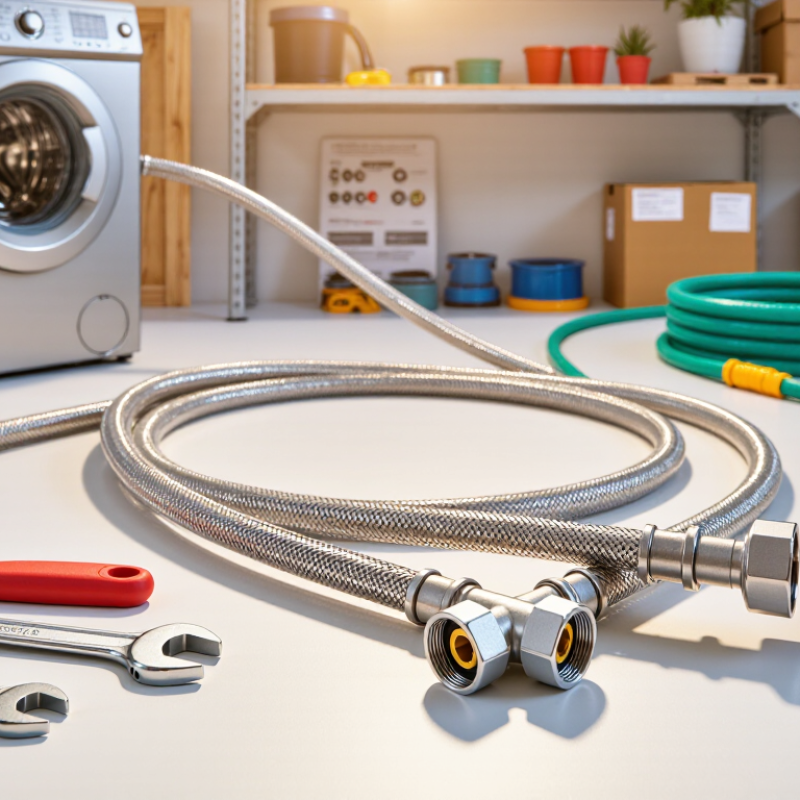
A splitter hose is a flexible hose assembly that divides one water supply into two outlets. It usually includes a threaded inlet, a branching body, two valves, and sealing washers. Water enters through the inlet. The internal passage directs flow into separate channels. Each valve controls one outlet, so users can run two connections independently. Some models allow both outlets to operate at once, although pressure may drop.
In practical use, connect the inlet to a compatible tap or supply line. Tighten it by hand, then make a small adjustment with a suitable wrench. Do not force the thread. Open the supply slowly and inspect every joint for drops. A properly fitted washer often prevents leaks better than excessive tightening. For global buyers, thread standards, hose material, temperature range, and operating pressure need careful checking. A product that fits one market may not fit another. This detail is easy to overlook.
Reliable selection also depends on actual working conditions. Outdoor sunlight, freezing weather, or hard water can shorten service life. Choose materials suited to the installation environment, not only the lowest price. Flow performance should be tested with both outlets open. That result can be surprising. In my experience, installation instructions are sometimes too general. Buyers should confirm dimensions, connector type, and replacement washer availability before ordering. Even a sturdy hose can fail when storage, pressure, or compatibility is ignored.
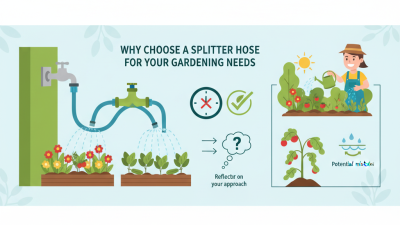
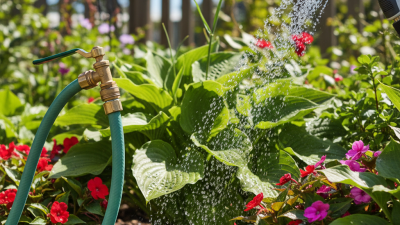
For global buyers, a splitter hose offers practical control where water access is limited. One inlet can serve two outlets, supporting irrigation, cleaning, or equipment filling at the same time. This reduces repeated connection work. It also saves labor.
FAO’s AQUASTAT database reports that agriculture uses about 70% of global freshwater withdrawals. That figure makes flow management commercially important, not decorative. A well-designed splitter hose can direct water only where needed, while separate shut-off valves prevent unnecessary discharge. In field use, operators can water one planting row while preparing another hose nearby. Small details matter. Clear outlet markings, corrosion-resistant fittings, and flexible tubing reduce errors during installation. However, a splitter does not create more water pressure. Poorly sized outlets may weaken flow, especially across long export shipments or elevated systems.
The U.S. Environmental Protection Agency reports that household leaks can waste more than 9,000 gallons of water annually. Although this figure concerns residential plumbing, it highlights a similar purchasing issue: uncontrolled flow becomes measurable waste. International buyers should review pressure ratings, temperature limits, thread compatibility, and replacement-part availability. Product testing records are valuable evidence. So are batch numbers and inspection photographs. The International Organization for Standardization’s quality-management guidance also emphasizes consistent processes and traceability. A low-cost splitter may appear attractive, yet brittle seals can fail after repeated seasonal use. That is the uncomfortable part. Buyers should compare lifetime performance, not only unit price. Conversations with installers often reveal weaknesses that product sheets miss.
| Evaluation Dimension | What a Splitter Hose Provides | Benefit for International Buyers | Important Selection Considerations |
|---|---|---|---|
| Multi-Outlet Function | One inlet supplies two or more outlet branches through an integrated hose assembly. | Supports simultaneous connection of multiple devices or work areas without installing separate supply lines. | Confirm the number of outlets, outlet arrangement, connection type, and whether independent shut-off valves are required. |
| Installation Efficiency | Combines branching and flexible routing in a single product configuration. | Can reduce assembly steps, installation space, and the number of separate components required for a project. | Check branch spacing, overall hose length, bend radius, and the available installation area before ordering. |
| Fluid Compatibility | Can be manufactured with different hose materials and fitting materials for specific fluids. | Enables use in water, air, hydraulic oil, fuel, chemical, or other applications when the material is correctly selected. | Verify the fluid type, concentration, operating temperature, pressure, and material compatibility with the supplier. |
| Pressure Distribution | Distributes inlet pressure across multiple branches, subject to hose size, branch design, and flow demand. | Allows one supply source to serve several outlets in compact systems. | Do not assume equal flow at every outlet; calculate pressure loss and flow requirements for each branch. |
| Flow Capacity | Flow capacity depends mainly on internal diameter, hose length, fluid properties, fittings, and the number of active branches. | Helps buyers select a configuration suitable for different operating loads and equipment requirements. | Compare required flow rate with the manufacturer’s pressure-drop data rather than relying only on the external hose diameter. |
| Flexibility and Routing | Flexible hose sections can accommodate movement and routing around equipment more easily than rigid pipe assemblies. | Useful for machinery, workshops, mobile equipment, temporary installations, and confined spaces. | Respect the specified minimum bend radius and avoid twisting, sharp edges, excessive tension, or unsupported hanging loads. |
| Connection Standards | Available configurations may use threaded, quick-connect, flanged, or other connection formats. | Offers compatibility options for different regional systems and imported equipment. | Confirm thread form, nominal size, sealing method, dimensional tolerances, and applicable local requirements. |
| Temperature Range | Operating temperature is determined by the hose tube, reinforcement, cover, fittings, and conveyed medium. | Supports applications in both indoor and outdoor environments when the temperature limits are documented. | Request minimum and maximum working temperatures for the complete assembly, not only for the hose tube. |
| Pressure Rating | Working pressure and burst pressure vary according to construction, size, temperature, and fitting assembly. | Provides a basis for safer product matching across different operating conditions. | Use the lowest-rated component as the system limit and allow for pressure surges where applicable. |
| Maintenance and Replacement | Individual branches can often be inspected, isolated, or replaced depending on the assembly design. | May simplify troubleshooting and reduce downtime compared with replacing a complex rigid distribution layout. | Choose accessible valves and fittings, and maintain records of hose size, material, pressure rating, and installation date. |
| Packaging and Shipping | Flexible assemblies can generally be coiled or packed in compact cartons when protected from excessive bending and impact. | Can support easier international handling and lower storage requirements than bulky rigid assemblies. | Specify packing dimensions, protection for fittings, moisture control, labeling, and documentation for export handling. |
| Quality Documentation | Commercial documentation may include material information, pressure ratings, test records, drawings, and inspection details. | Helps importers, installers, and project engineers verify suitability and maintain traceability. | Request documents that match the exact hose assembly configuration and the destination market’s compliance requirements. |
| Typical Applications | Common uses include fluid distribution, pneumatic equipment, irrigation layouts, industrial machinery, workshops, and service systems. | Provides a versatile solution for projects with multiple connection points and limited routing space. | Application suitability must be confirmed using the actual medium, pressure, temperature, environment, and duty cycle. |
| Total Cost of Ownership | Cost includes the assembly, fittings, valves, installation labor, inspection, replacement, and potential downtime. | A complete comparison can reveal savings beyond the initial purchase price. | Evaluate service life, spare-part availability, warranty terms, maintenance access, and freight requirements. |
Note: Performance values depend on the complete hose assembly and application conditions. Always verify the required pressure, temperature, flow rate, fluid compatibility, connection dimensions, and applicable regulations before purchase.
Why Choose a Splitter Hose for Global Buyers?
How to Select the Right Splitter Hose for Different Applications
Global buyers should select a splitter hose by application, not appearance. A garden manifold, chemical transfer line, and compressed-air branch need different construction. Start with the fluid, operating temperature, working pressure, and required flow. Check the hose’s pressure rating at its highest temperature. That detail is often missed. The FAO AQUASTAT database reports that agriculture uses about 70% of global freshwater withdrawals. This makes flow control and leak resistance practical concerns, not decorative features. Choose reinforced layers, compatible seals, and individual shutoff valves where branches operate separately.
For irrigation, measure inlet pressure and estimate each outlet’s simultaneous demand. For workshops, prioritize abrasion resistance, bend radius, and coupling security. For potable-water service, verify material documentation and applicable local requirements. The U.S. Environmental Protection Agency estimates household leaks waste nearly one trillion gallons annually in the United States. A poorly matched splitter can add another failure point. Keep it visible. Inspect threads, clamps, kinks, and soft spots before installation and during use. I have seen buyers focus on diameter while ignoring heat and movement. That shortcut can be expensive. ISO 18752 offers a useful framework for hydraulic hose performance classes, but it does not replace application-specific verification. Ask for test data, traceability, and a clearly stated working-pressure margin. Some supplier tables look precise, yet connection tolerances still deserve a physical check.
Why Choose a Splitter Hose for Global Buyers?
Material selection determines whether a splitter hose survives daily pressure and movement. A 2024 industry analysis estimated the global industrial hose market at more than USD 15 billion. That scale reflects demand for safer, longer-lasting fluid connections. EPDM suits water and many outdoor conditions, while nitrile performs better with petroleum-based fluids. Thermoplastic layers can reduce weight, but they may need extra protection against heat and abrasion. Reinforcement matters too. Braided textile works for moderate service; steel wire supports higher pressure and impulse cycles.
International buyers should request test evidence, not attractive photographs. ISO 18752 classifies rubber hoses through pressure, temperature, and impulse requirements. ASTM D380 describes tests for rubber hose construction and performance. EN 853 remains relevant for several hydraulic hose applications in European supply chains. Confirm the working pressure of the complete assembly, including the splitter, fittings, and clamps. The weakest component controls real safety. It is easy to miss this detail.
Quality checks should include dimensional inspection, leakage testing, bend-radius verification, and material traceability. A 2023 technical report from the U.S. Consumer Product Safety Commission emphasizes that failure investigations often involve installation, aging, or misuse, not only material defects. That deserves attention. Ask for batch records and certificates from an accredited laboratory. Still, certificates are not perfect. Storage sunlight, twisting, and repeated sharp bending can shorten service life before the rated limit. A field trial under actual temperature and flow conditions remains valuable, even when laboratory results look excellent.
Material selection directly affects temperature resistance, flexibility, chemical compatibility, and service life. The ranges below show commonly specified continuous operating temperatures for representative hose materials; the exact limits depend on formulation, reinforcement, fittings, pressure, and media. Buyers should also verify applicable requirements such as ISO 18752, SAE J20, or EN 853 according to the intended application.
What Global Buyers Should Know About Sourcing and Maintenance
A splitter hose can supply two water outlets from one connection. This helps farms, workshops, and household users save space. Global buyers should check thread standards before ordering. A fitting that looks correct may still leak. Confirm inlet size, outlet size, pressure rating, and temperature range. Ask suppliers for material details and inspection records. Brass, reinforced polymer, and stainless steel offer different balances of strength, weight, and cost.
Request samples before placing a large order. Test the hose under normal pressure, then inspect it after repeated bending. Look closely at the connector, valve handle, and sealing washer. Packaging also matters. Crushed threads create problems before installation. Clear labels reduce mistakes in warehouses and during export handling. A reliable supplier should explain tolerances, replacement parts, and batch testing. Vague answers deserve caution.
Maintenance is simple, but often ignored. Rinse dirt from the connector after use. Keep the valve closed when the system is idle. Replace a flattened washer instead of overtightening the fitting. Overtightening can damage threads. Store the hose away from sharp edges and strong sunlight. Seasonal temperature changes may harden seals. Inspect them regularly.
Small checks prevent costly returns.
I would not assume the cheapest option is efficient. A low purchase price can hide weak seals, inconsistent sizing, or poor packaging. Yet premium materials are not always necessary. Match construction to water pressure, climate, and daily workload. That decision is less impressive, but usually more dependable.