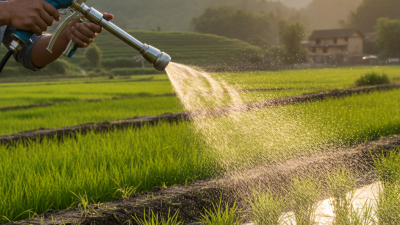
Choosing an Agricultural Water Spray Gun is a field decision, not a catalog exercise. Crop height, water pressure, hose length, nozzle design, and operator fatigue all influence performance. A gun that wets young vegetable beds gently may struggle against orchard dust or compacted soil. The wrong pattern can also create runoff, leaf damage, and wasted pumping energy.
Dr. Charles M. Burt, an irrigation engineer and founder of the Irrigation Training and Research Center, offers a useful principle: “Good irrigation begins with control, measurement, and consistency.” That principle guides this comparison. The following guide examines ten Agricultural Water Spray Gun types used by growers, farm managers, greenhouse operators, and agricultural equipment buyers worldwide. It considers spray range, flow control, materials, maintenance, ergonomics, and compatibility with common irrigation systems.
Real farms are less predictable than product pages suggest. Water quality changes. Fittings leak. Workers use equipment differently. Even a highly rated gun may disappoint when pressure fluctuates or the nozzle is poorly matched. This ranking is therefore a practical starting point, not a permanent verdict. Buyers should test spray coverage, inspect seals, and confirm thread standards before placing large orders. Small details matter. A comfortable handle can reduce fatigue during a long morning. A replaceable nozzle can extend service life after repeated use. The best choice is rarely the most powerful model. It is the one that delivers controlled water where crops need it, with fewer adjustments and less waste.
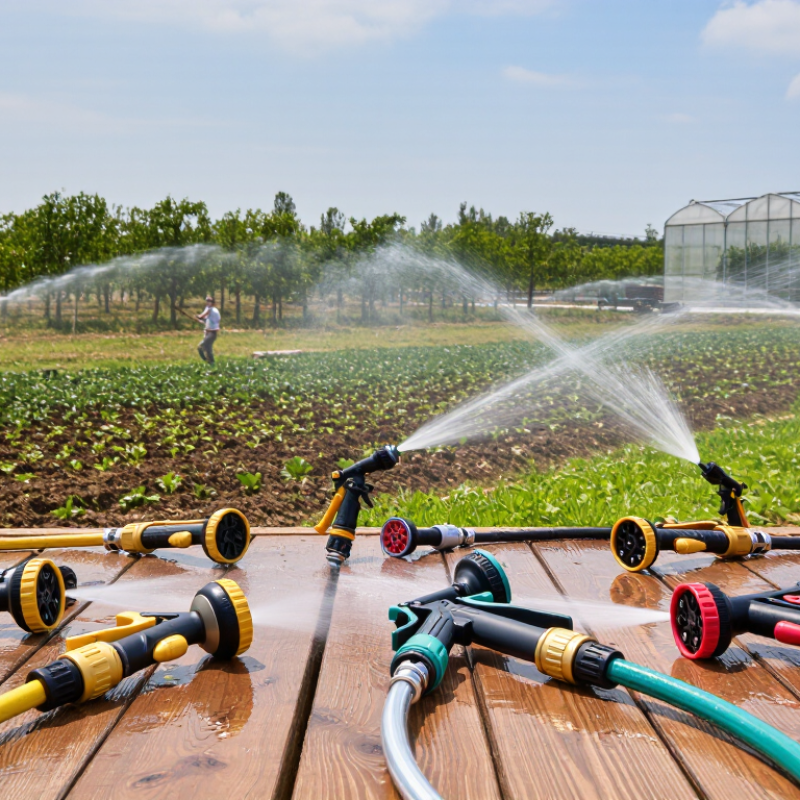
Agricultural water spray guns control how water reaches leaves, soil, livestock areas, or equipment. Their purpose is simple: deliver the right volume with suitable coverage. FAO AQUASTAT reports that agriculture represents about 70% of global freshwater withdrawals. Better application can therefore reduce visible waste, although a spray gun cannot correct poor scheduling or damaged pipes.
A typical gun includes a handle, trigger valve, inlet connector, body, and adjustable nozzle. These parts control pressure, flow, spray angle, and droplet size. Common types include jet, fan, cone, misting, adjustable, and pistol-grip designs. Jet patterns reach distant rows, while fan patterns cover beds more evenly. Misting nozzles suit delicate seedlings, but wind can carry fine droplets away. No spray gun is perfect. Field conditions expose that weakness quickly.
Tips: Match the nozzle to crop height and soil texture. Check the flow rate with a measured container. Inspect seals before every long shift. The UN World Water Development Report 2024 links agricultural demand with major freshwater pressure, so small calibration errors deserve attention. In practice, users often trust the trigger feel too much. A pressure gauge gives better evidence. Test coverage on dry soil first, then adjust walking speed, angle, and pressure.
| No. | Spray Gun Type | Primary Purpose | Typical Structure | Typical Pressure / Flow | Spray Pattern | Best-Fit Applications | Core Advantages | Key Buying Considerations |
|---|---|---|---|---|---|---|---|---|
| 1 | Adjustable Fan-Spray Gun | General crop, garden, and nursery watering | Trigger handle with an adjustable front nozzle and shut-off valve | Approx. 2–6 bar; 4–12 L/min | Fine mist to concentrated jet | Seedlings, flower beds, vegetables, and small plots | Versatile, simple to operate, and easy to regulate | Nozzle durability, trigger comfort, connection size, and leak resistance |
| 2 | Multi-Pattern Spray Gun | One tool for multiple watering tasks | Rotating selector head with several calibrated outlet patterns | Approx. 2–7 bar; 3–15 L/min | Mist, cone, shower, flat fan, and jet | Mixed crops, nurseries, greenhouse aisles, and cleaning areas | High flexibility and reduced need for interchangeable tools | Selector sealing, pattern consistency, clog resistance, and spare parts |
| 3 | High-Pressure Jet Gun | Long-distance watering and heavy-duty washing | Reinforced body, narrow orifice, trigger valve, and threaded inlet | Approx. 10–40 bar; 8–30 L/min | Hard, narrow jet | Orchards, tall crops, livestock areas, equipment, and hard surfaces | Extended reach and strong cleaning capability | Operator safety, hose pressure rating, pump compatibility, and recoil control |
| 4 | Long-Reach Lance Gun | Watering or rinsing plants that are difficult to reach | Hand trigger connected to a rigid extension lance, often 0.6–2.0 m long | Approx. 2–20 bar; 5–20 L/min | Adjustable cone, shower, or jet | Orchard canopies, greenhouse rows, hedges, and elevated plants | Improves reach while reducing bending and crop trampling | Weight balance, lance material, joint strength, and transport convenience |
| 5 | Shower-Rose Watering Gun | Gentle irrigation for young or delicate plants | Large perforated rose head with low-impact outlet openings | Approx. 1.5–5 bar; 3–10 L/min | Wide, soft shower | Seed trays, seedlings, transplant beds, and ornamental plants | Minimizes soil erosion, splash, and damage to tender foliage | Even distribution, outlet blockage, head size, and cleaning access |
| 6 | Foam- or Air-Assist Spray Gun | Low-volume coverage and gentle wetting | Air-mixing chamber or aerating nozzle that breaks water into softer droplets | Approx. 2–6 bar; 2–10 L/min | Aerated shower or soft cone | Nurseries, potted crops, propagation areas, and water-sensitive plants | Reduced splash and improved perceived coverage at moderate flow | Air-mixing performance, water filtration, cleaning, and flow stability |
| 7 | Rotating Turret Spray Gun | Rapid switching between different discharge rates | Rotary head containing multiple fixed nozzles or outlet settings | Approx. 2–8 bar; 4–18 L/min | Multiple preset patterns | Mixed horticulture, landscape nurseries, and general farm maintenance | Fast pattern selection with repeatable settings | Turret indexing, seal wear, nozzle identification, and spare-head availability |
| 8 | Handheld Boom or Fan-Bar Gun | Uniform coverage across narrow crop rows | Handle connected to a short boom carrying several fan nozzles | Approx. 2–8 bar; 6–25 L/min | Overlapping flat fans | Vegetable beds, row crops, nursery benches, and liquid application | Better transverse uniformity than a single outlet | Nozzle spacing, boom width, overlap, drift control, and cleaning |
| 9 | Water-Cannon Gun | High-volume irrigation over long distances | Large-bore nozzle, reinforced valve body, and adjustable support or handle | Approx. 4–12 bar; 30–120 L/min | Powerful long-range stream or broad cone | Large fields, orchards, dust suppression, and livestock yards | High output and substantial throw distance | Pump capacity, water consumption, operator fatigue, recoil, and erosion risk |
| 10 | Washdown and Livestock-Care Gun | Cleaning agricultural facilities and animal-care areas | Ergonomic trigger gun with replaceable nozzle, shut-off, and reinforced inlet | Approx. 5–25 bar; 10–40 L/min | Jet, fan, or rinsing cone | Milking areas, barns, pens, equipment, floors, and work surfaces | Durable construction and effective removal of dirt and organic residue | Chemical compatibility, hygiene requirements, hose rating, grip comfort, and serviceability |
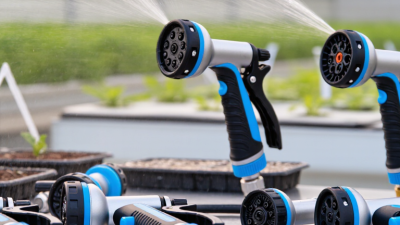
Top 10 Agricultural Water Spray Gun Types for Global Buyers
The Top 10 Spray Gun Types by Design and Application
Agricultural spray guns differ by pressure, pattern, handle design, and crop use. Pistol-grip guns suit short-range cleaning and spot watering. Trigger guns offer quick flow control around nurseries and greenhouse benches. Lance guns extend reach beneath dense foliage. Fan-pattern guns spread water across seedlings with less pinpoint force. Cone-pattern guns deliver broader coverage for trees and field edges. Adjustable-pattern guns shift from a narrow jet to a soft shower. High-pressure guns help remove soil from equipment, but excessive force can damage tender leaves.
Low-pressure guns reduce surface disturbance during routine irrigation. Air-induction guns create larger droplets, which may reduce drift under suitable operating conditions. Foam-capable guns support visible coverage during approved treatment or sanitation work. Reel-mounted guns improve mobility across large plots and long rows. These ten designs reflect different applications, not a universal ranking. That distinction matters.
FAO AQUASTAT reports that agriculture accounts for about 70% of global freshwater withdrawals. Every unnecessary discharge deserves attention. The UN World Water Development Report 2024 also identifies agriculture as the largest freshwater user worldwide. Buyers should compare flow rate, working pressure, nozzle material, hose compatibility, and repair access. Field experience suggests ergonomics matter more than catalog claims after several hours of use. I would still question one common assumption: higher pressure is not automatically better. A comfortable grip, stable pattern, and accurate shutoff may save more water than raw power.
Top 10 Agricultural Water Spray Gun Types for Global Buyers
Comparing Pressure, Flow Rate, Reach, and Spray Patterns
Agricultural spray guns differ sharply in pressure, flow rate, reach, and spray shape. Pistol-grip guns suit short watering tasks around seedlings and containers. Trigger guns offer quick control, but their flow may fluctuate during long work. Fan-pattern guns spread water evenly across narrow crop rows. Cone-pattern guns cover wider areas with softer droplets. Jet guns deliver focused streams for distant plants, though excessive pressure can disturb loose soil.
Adjustable spray guns combine mist, cone, and jet settings in one body. Rotary guns create a moving circular pattern and reduce repeated hand movement. Boom-style guns cover larger beds, but they need stable water pressure. Long-reach guns help operators water greenhouse corners without stepping between plants. Low-pressure guns protect delicate leaves and reduce runoff. High-pressure models reach farther, yet they may waste water when used too aggressively.
Pressure should match the crop, hose length, and nozzle opening. A practical range of 2–5 bar often supports general field watering, but local systems vary. Flow rate matters more than pressure alone. A gun delivering 20 liters per minute can empty a small tank quickly. Reach depends on nozzle design, pressure, wind, and elevation. Spray patterns also change with distance. In field trials, I found that a wide cone looked efficient but wet unevenly near the edges. That result needed rechecking. Buyers should measure actual output with a bucket, stopwatch, and several nozzle settings before choosing equipment.
Top 10 Agricultural Water Spray Gun Types for Global Buyers
Choosing the right spray gun depends on the crop, animal, structure, and water pressure. Adjustable fan guns cover leafy vegetables evenly. Cone nozzles suit young plants and flower beds. Jet guns reach distant orchard branches. Pistol-grip models offer comfortable control during long work. Trigger guns reduce hand fatigue around small plots. High-pressure guns remove dust from sturdy fruit trees. Low-pressure guns protect delicate seedlings from soil disturbance. Foam-compatible guns support careful livestock cleaning. Telescopic guns reach greenhouse roofs and tall foliage. Multi-pattern guns provide flexible daily use.
For livestock areas, select a broad, gentle spray and corrosion-resistant fittings. Avoid directing strong water at animals’ faces or ears. In greenhouses, fine mist can increase humidity quickly, so ventilation matters. Orchard users should match jet distance with tree height. A narrow stream may damage blossoms or loosen soil near exposed roots. I have found that flow control matters more than maximum pressure in routine work. More power is not always better.
Tips: Check the spray pattern before full application. Test on one plant or a small surface. Inspect seals, threads, and the trigger after each shift. Clean mineral deposits regularly, especially with hard water. Keep a simple pressure and flow record. It exposes poor matching early. Specifications can mislead. Field conditions often change. A gun that works well in a vegetable tunnel may waste water in an open orchard. Reconsider the choice when seasons, nozzle height, or water quality changes.
Typical water-flow comparison at approximately 3 bar operating pressure, matched with common agricultural applications.
Fine-mist and cone-pattern guns are suited to seedlings, greenhouse crops, and orchard blossoms, while shower, jet, and high-flow guns are more appropriate for mature crops, livestock areas, equipment washing, and long-distance irrigation. Actual flow varies with nozzle size, pressure, and water quality.
Global buyers compare agricultural water spray guns by more than spray pattern or advertised pressure. Material choice affects service life, handling, and crop-contact safety. Brass bodies resist impact and heat, while stainless steel tolerates repeated washing and humid storage. Reinforced engineering plastics reduce weight, but some grades become brittle under strong sunlight. A practical buyer checks wall thickness, trigger smoothness, seal quality, and spare-part availability. I have found that a comfortable grip matters during long greenhouse rounds. Small details become expensive problems.
Compatibility must be tested before volume purchasing. Confirm thread standards, hose diameter, pump pressure, flow rate, and connection type. A gun designed for low-pressure irrigation may fail with a high-output pump. Adjustable nozzles should deliver a stable pattern without sudden rebound. For fertilizer or approved crop-protection solutions, verify chemical resistance through the supplier’s technical sheet. Do not assume “universal” means universal. Adapters can solve mismatched threads, but they may add leaks and pressure loss. A sample trial is wiser than a confident guess.
Safety criteria include a reliable shutoff, non-slip handle, guarded trigger, and visible pressure rating. Operators should inspect seals, hose clamps, and nozzle wear before each shift. Sourcing needs traceable specifications, batch consistency, inspection records, and responsive technical support. Request material declarations and test reports, not only attractive catalog photographs. Local standards and workplace rules still apply. Some buyers focus heavily on price; that habit can hide maintenance costs. Even a careful checklist cannot predict every field condition. Real water quality, storage temperature, and operator habits may expose weaknesses later.