Choosing the right Rotating Spray Head starts with the job, not the product label. A model designed for rinsing a wide tank may perform poorly in a narrow pipe. Before comparing options, identify the surface, soil type, available space, and cleaning time. These details shape the spray pattern and rotation speed you need.
Check the equipment’s rated pressure and flow rate against your pump or washer specifications. A mismatch can reduce cleaning performance or strain components. Then consider connection size, materials, and the fluid being sprayed. Stainless steel may suit demanding environments, while other materials can work for less abrasive applications. Always confirm compatibility with the manufacturer’s documentation. Small print matters.
Think about access, too. A compact head may fit through a small opening, but its coverage could be limited. A larger head might clean faster while needing more clearance. Look for clear performance data, recommended operating conditions, and practical maintenance instructions. If specifications are vague, ask the supplier how the head performs under conditions similar to yours.
There is no universal best choice. Not always. Even a well-matched head may need testing on the actual equipment, because residue, geometry, and water quality can change results. A sensible selection balances cleaning coverage, durability, operating limits, and ease of inspection. This guide explains how to compare those factors and avoid relying on appearance or broad claims alone. A careful check now can prevent uneven cleaning and unnecessary replacement later.

A rotating spray head distributes water by turning its nozzle or internal mechanism through a set arc. In a gear-driven rotor, pressurized water moves a small turbine and gear train; the nozzle then sweeps across the lawn in a steady path. Rotary nozzles use several narrow, rotating streams instead of one broad spray. The exact design varies, so “rotating” does not always mean the same thing. Look closely: a visible sweep, a soft mechanical click, or several thin streams can reveal how the head works.
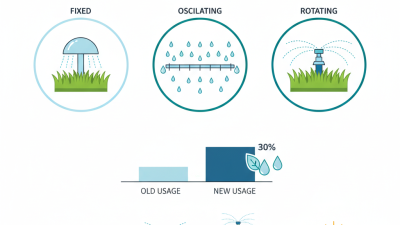
Water pressure powers the motion, but it also affects coverage. Too little pressure may leave the head turning slowly or unevenly; excessive pressure can create fine mist that drifts away. EPA WaterSense estimates that outdoor use makes up more than 30% of total household water use in the United States, though the share varies by location and season. That figure is useful context, not a promise that one nozzle will save a set amount. A dry crescent near a path can signal a coverage gap, while water running onto pavement suggests the arc or runtime needs adjustment. Check the pattern while the system runs. The manual’s specifications help, but real yard conditions can disagree.

Match the rotating spray head to the task before comparing features. For irrigation, check the area shape, required reach, soil, and slope. A narrow bed beside a wall needs a different spray pattern from an open lawn. For cleaning, consider the surface and the type of residue: a patio joint, for example, needs more focused coverage than a dusty garden table. More force is not always better; delicate surfaces can be marked.
The U.S. Environmental Protection Agency estimates that outdoor use accounts for about 30% of household water use in the United States, and inefficient irrigation can waste up to 50% through evaporation, wind, and runoff. These figures make coverage and adjustment worth checking, not just the advertised spray range. Observe the head in use: dry patches may indicate gaps, while water running off the soil suggests the spray rate or timing needs attention. Small details matter.
Tips: For irrigation, test coverage on a calm day and look for overspray onto paths. For cleaning, begin with a less aggressive setting and test an inconspicuous spot. It is easy to choose a head by reach alone. That can be the wrong priority.
Source: U.S. Environmental Protection Agency, “Outdoor Water Use in the United States.”
Before selecting a rotating spray head, compare its required flow and pressure with the system’s measured output. A head designed for higher pressure may rotate poorly on a low-pressure line. Too much pressure can cause excessive wear or uneven spray. Check inlet size, thread type, and available clearance around the rotating assembly. Small mismatches matter.
Water quality and temperature matter, too. Fine particles can obstruct narrow passages, while hard water may leave deposits on the nozzle. Check the manufacturer’s material and chemical-compatibility specifications against the actual cleaning fluid. Do not assume that a stainless-steel body makes every seal suitable. The U.S. Department of Energy’s 2006 sourcebook, Improving Pumping System Performance, estimates that pumps use nearly 20% of global electricity. That makes flow and pressure matching an operating-cost issue, not just a fit question. Record pressure at the connection while the system runs; static readings can mislead. A simple pressure gauge helps. Spray coverage should also be tested on the real vessel or surface, because geometry and drainage alter impact. One overlooked detail: filters can reduce pressure as they load, so check performance after routine operation, not only at startup.
| Rotating spray head configuration | Typical application | Indicative pressure and flow | System compatibility checks | Operating conditions to verify |
|---|---|---|---|---|
| Low-pressure rotating spray head | Light rinsing and general coverage in tanks or vessels with readily removable residue. | Often selected around 1–3 bar; flow varies substantially with nozzle size and supply conditions. | Check available pump pressure at the head, pipe losses, inlet connection, and whether the supply can maintain the required flow while other outlets are operating. | Confirm tank dimensions, required coverage, liquid temperature, and whether the spray can drain freely without pooling. |
| High-impact rotary jet head | Removal of more tenacious deposits where a focused, higher-energy wash is appropriate. | Commonly used at higher pressures, often about 5–20 bar; flow depends on the selected orifice and operating pressure. | Verify pump capacity, pressure rating of the head and pipework, hose and seal ratings, and that the supply remains stable during the cleaning cycle. | Assess the residue’s adhesion, surface sensitivity, tank geometry, and potential for splash, aerosol, or damage from concentrated jets. |
| Motor-driven rotating head | Applications requiring controlled rotation or a defined cleaning cycle, including installations where rotation should not rely solely on fluid reaction. | Operating pressure and flow are model-dependent; use the specified range rather than assuming compatibility with a standard spray-head range. | Check electrical supply, motor enclosure and ingress protection, cable routing, control requirements, connection size, and pressure limits. | Confirm ambient and wash-fluid temperatures, duty cycle, cleaning chemicals, and access for inspection and maintenance. |
| Compact rotating nozzle | Smaller vessels or restricted installation spaces where a compact footprint and targeted coverage are needed. | Pressure and flow are determined by the nozzle design; compare its required flow with the pump curve and available line capacity. | Check overall dimensions, insertion opening, connection thread or flange, clearance for rotation, and the effect of filters or valves on pressure. | Verify that all target surfaces are within the spray reach and that vessel internals do not block the rotating pattern. |
| Material and fluid compatibility | Applies to every configuration and is essential for service life and process safety. | Not pressure-specific; check the head, seals, and connections against the full pressure and temperature cycle. | Compare wetted materials with the cleaning fluid, rinse water, and any process carryover. Stainless steel grades and polymer or elastomer choices are not universally interchangeable. | Check chemical concentration, temperature, exposure time, pH, and any applicable hygiene or process requirements. Confirm compatibility with the material supplier. |
| Filtration and fluid quality | Important for heads with small orifices, bearings, or moving components. | Filter rating must suit the smallest flow passage; use the head specification for the maximum permitted particle size. | Check filter capacity, cleanliness, pressure drop, and whether the filter can be inspected and cleaned without contaminating the system. | Consider suspended solids, scale, corrosion products, and fluid viscosity. Particles or viscous fluids can restrict flow or interfere with rotation. |
| Installation and maintenance | Use this check for new installations and replacement heads. | Measure dynamic pressure at or near the head while it is operating; static pressure alone does not confirm adequate performance. | Confirm orientation, support, connection sealing method, access for removal, and compatibility with the existing pump, piping, and control sequence. | Plan inspection for wear, blockage, leakage, and free rotation. Establish a cleaning or replacement interval based on actual service conditions. |
A rotating spray head can produce a focused jet, a wider fan, or several pulsing streams. Match the pattern to the task: a narrow spray reaches into corners, while a broad pattern covers larger surfaces more evenly. Check the spray head’s stated operating pressure, too. Low pressure may weaken rotation; excessive pressure can cause splashback or uneven coverage. If possible, test it with the same hose and water supply you plan to use.
Material affects durability and handling. Stainless steel resists corrosion in many settings, while brass offers a sturdy feel but may be heavier. Polymer heads are often lighter and easier to handle, though their durability depends on construction and exposure. Check seals, connection threads, and compatibility with your water conditions. I used to focus on the nozzle material alone. That was incomplete; seals can wear first. Performance also depends on clean water, so inspect or clean the inlet screen when flow drops.
Tips: Compare spray patterns at your actual water pressure, not just in product photos. Look for a steady rotation, minimal leaking, and a grip that stays comfortable when wet. A small change in angle can matter. Keep notes during testing; it is easy to misjudge coverage from memory.
How to Choose the Right Rotating Spray Head
Choose a model for the job, not just its advertised coverage. A head cleaning a narrow tank needs a different spray pattern from one rinsing a broad, shallow vessel. Check the surface, residue, available clearance, and mounting position. Then compare the required flow and pressure with your supply. A unit that rotates well on paper may perform poorly if the inlet pressure is too low. More coverage is not always better.
Verify the specification sheet before ordering. Confirm operating pressure, flow rate, spray angle, rotation range, connection size, and wetted materials. Check whether the stated flow applies at your actual pressure; maximum figures can be misleading. Also review temperature limits and any duty-cycle restrictions. One detail is easy to miss: the installed head may need space to turn freely. It is tempting to select the strongest model, but excessive flow can waste water or disrupt a controlled rinse. A quick fit check can prevent an awkward mismatch.
Tips: Compare specifications at the same pressure. Measure the opening and nearby obstructions. If the data sheet leaves a key limit unclear, ask the supplier before purchase. Record the final setup, since real performance can differ from expectations.
These values are theoretical estimates for water at 3 bar, calculated using an orifice discharge coefficient of 0.62. Actual flow depends on the spray head’s internal design. Before choosing a model, verify its published flow rate, operating-pressure range, spray pattern, rotation requirements, and connection size.