How to Choose the Best Rotating Sprinkler for Your Garden Needs
Selecting the right watering equipment can significantly enhance the health and beauty of your garden. Among the various options available, a rotating sprinkler stands out for its efficiency and effectiveness in covering large areas with water. When aiming to maintain a lush and vibrant garden, understanding your unique needs and the features of a rotating sprinkler becomes crucial. This decision not only impacts your garden's hydration but also influences water conservation efforts, ensuring that every drop counts.
As you embark on the journey of choosing the best rotating sprinkler, consider factors such as the size of your garden, the type of plants you are nurturing, and the water pressure in your area. With various designs and features available, a rotating sprinkler can adapt to different garden layouts and watering requirements, making it an invaluable tool for any gardener. In the following sections, we will explore key aspects to keep in mind, helping you to make an informed choice that will support your gardening endeavors for years to come.
Understanding the Different Types of Rotating Sprinklers Available
When it comes to selecting the best rotating sprinkler for your garden, understanding the variety of options available is crucial. Rotating sprinklers typically come in three main types: impact sprinklers, gear-driven sprinklers, and oscillating sprinklers. Each type delivers water differently and is suited for various garden sizes and shapes. According to the Irrigation Association, impact sprinklers are popular for their durability and ability to cover large areas with a long throw range, making them ideal for expansive lawns.
On the other hand, gear-driven sprinklers operate quietly and provide more precise watering patterns, which is essential for gardens with intricate designs or delicate plants. They often feature adjustable settings that allow users to customize the radius and distance of the spray, aligning with the specific watering needs of different plants. A report by the EPA indicates that implementing efficient watering systems, including rotating sprinklers, can reduce water usage by up to 50% in landscaping applications. Lastly, oscillating sprinklers are excellent for rectangular areas, ensuring even coverage across broader surfaces, which proves beneficial for flower beds and vegetable gardens.
In summary, when assessing rotating sprinklers, consider the size of your garden, the types of plants you’re watering, and the watering efficiency you wish to achieve. Gathering data on your garden’s specific needs and comparing the features of each sprinkler type will help you make a well-informed choice that contributes to maintaining a vibrant and healthy garden ecosystem.
Key Factors to Consider When Selecting a Rotating Sprinkler
When selecting a rotating sprinkler for your garden, several key factors come into play to ensure you choose the best option for your watering needs. First and foremost, consider the size of your garden. Rotating sprinklers vary in coverage area, typically ranging from small to large capacities. It's important to assess the dimensions of your garden to determine whether you need a sprinkler that covers a specific radius or one that can handle a larger expanse if your garden is more extensive.
Another critical factor to think about is the water pressure available in your area. Different rotating sprinklers require varying levels of water pressure to function efficiently. A sprinkler designed for low pressure may not perform optimally in high-pressure environments and vice versa. Therefore, understanding your water pressure not only helps in selecting an appropriate sprinkler but also ensures effective watering without wasting water or energy.
Additionally, consider features such as the range of adjustability and rotation speed. Some models allow you to customize the distance and angle of water distribution, while others may offer multiple rotation speeds to suit different gardening tasks. These features can enhance the efficiency of your watering process, providing better coverage and ensuring that all areas of your garden receive adequate moisture, ultimately contributing to healthier plants and a vibrant garden.
Assessing Your Garden's Size and Watering Needs
When choosing the best rotating sprinkler for your garden, it’s essential to assess the size and specific watering needs of your space. A small garden may not require the same coverage as a sprawling lawn, so understanding your area will guide your decision. Measure the dimensions of your garden to determine the coverage area needed and consider the layout, including any obstacles like trees or flower beds that may affect water distribution.
Tips: Look for sprinklers that offer adjustable spray patterns, allowing you to customize the watering area. This feature can save water and ensure that every part of your garden receives adequate moisture.
Consider the type of plants in your garden as well. Different plants may have varying water requirements, with some needing more moisture than others. If your garden includes a mix of plants, opt for a sprinkler that allows you to adjust the flow rate or incorporate a schedule to water specific areas.
Tips: A timer can be a valuable addition, helping you manage watering times efficiently, avoiding overwatering or underwatering, which can damage plants. This setup is particularly useful for larger gardens where manual control can be impractical.
How to Choose the Best Rotating Sprinkler for Your Garden Needs - Assessing Your Garden's Size and Watering Needs
| Sprinkler Type |
Recommended Area Coverage (sq ft) |
Water Pressure Range (psi) |
Watering Pattern |
Price Range (USD) |
| Oscillating Sprinkler |
400 - 450 |
20 - 40 |
Rectangle |
30 - 50 |
| Impulse Sprinkler |
800 - 1000 |
30 - 60 |
Circular |
25 - 70 |
| Rotor Sprinkler |
1000 - 2500 |
30 - 70 |
Half-Circular |
50 - 100 |
| Traveling Sprinkler |
2000 - 4000 |
25 - 50 |
Variable |
100 - 150 |
| Soaker Hose Sprinkler |
150 - 600 |
10 - 30 |
Even Distribution |
20 - 40 |
Evaluating Sprinkler Features for Enhanced Performance
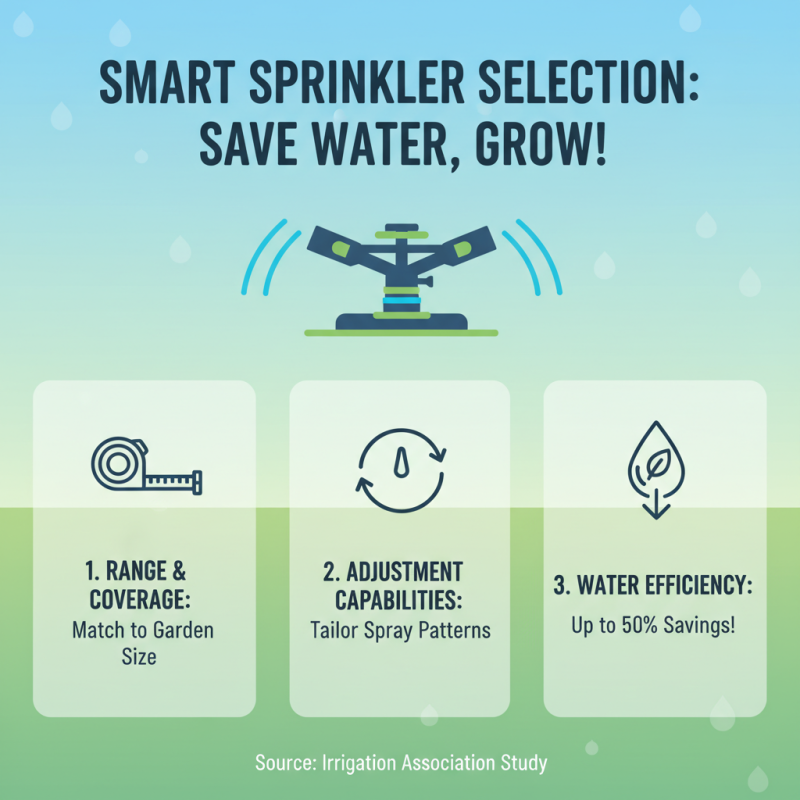
When selecting a rotating sprinkler for your garden, it is essential to evaluate specific features to ensure enhanced performance tailored to your particular needs. A study conducted by the Irrigation Association indicated that installing the right sprinkler can save up to 50% in water consumption compared to traditional watering methods. Key features to consider include the sprinkler's range, coverage area, and adjustment capabilities. For example, choosing a model with adjustable spray patterns allows you to effectively water different sections of your garden without over-saturation, which can lead to runoff and wasted resources.
Another critical aspect is the flow rate, which determines how much water the sprinkler delivers within a set timeframe. According to research from the American Society of Agricultural and Biological Engineers, an ideal flow rate for residential gardens typically ranges from 1 to 3 gallons per minute. This ensures efficient water distribution, maintaining optimum moisture levels in the soil without causing erosion. Additionally, features such as built-in timers and multi-directional heads can significantly enhance the ease of use and the efficiency of watering, catering to varying plant needs and promoting healthier garden growth. By focusing on these attributes, gardeners can make informed decisions that lead to sustainable and effective watering practices.
Budgeting for Your Ideal Rotating Sprinkler Setup
When planning to purchase a rotating sprinkler for your garden, budgeting should be one of your first steps. The cost of these systems can vary significantly based on features, size, and complexity. Start by determining how much you are willing to spend, keeping in mind that investing a bit more can often lead to better durability and efficiency. Outline all potential costs, including the sprinkler itself, any necessary attachments like hoses, and potential water usage increases that may result from your new system.
After establishing your budget, consider the specific needs of your garden. For small, contained spaces, a basic, less expensive model might suffice. However, larger gardens may require more advanced systems that offer greater coverage and efficiency, which can be more costly. Research the long-term savings on water by choosing an efficient model, as this can offset higher upfront costs. Additionally, factor in expected maintenance expenses to keep your system in good working order, ensuring that your investment pays off over time.
Rotating Sprinkler Types vs. Cost Analysis
This bar chart illustrates the average prices of different types of rotating sprinklers. Understanding these costs can help you budget effectively for your ideal sprinkler setup in your garden.