Leave Your Message

How to Choose the Best Garden Water Connectors?

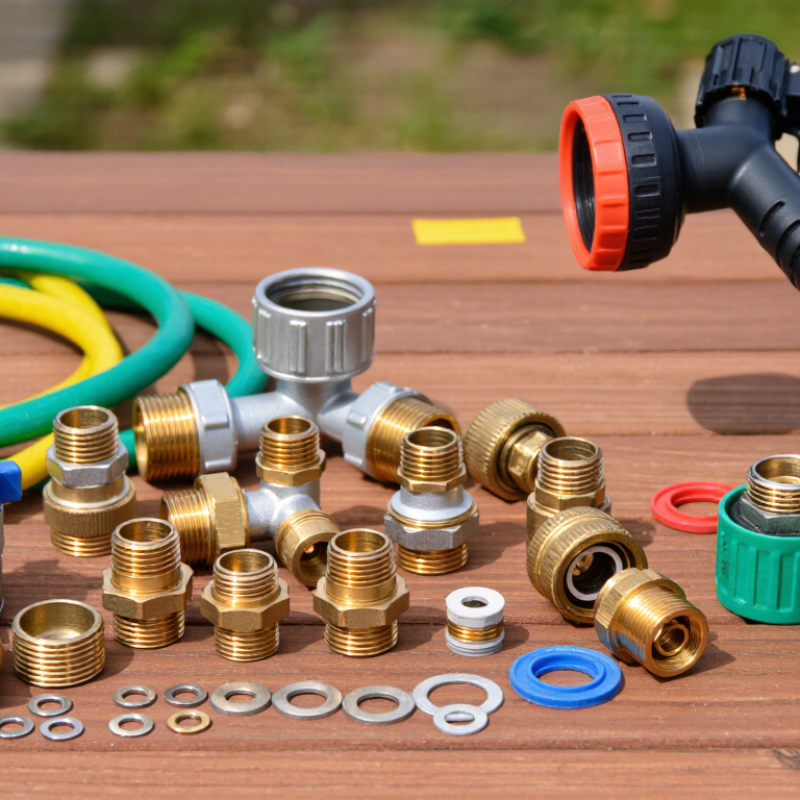
A garden hose connection looks simple until water sprays from a loose joint or a tap fitting refuses to turn. The right Garden Water Connectors can make watering easier, reduce drips, and help protect hoses from unnecessary strain. Yet “universal” does not always mean compatible. Tap threads, hose diameters, and connector styles vary, so checking measurements before buying matters. Small leaks add up. A fitting that twists on easily may still need a washer or a better seal.

This guide explains how to compare connector materials, sizes, locking systems, and useful features. Brass connectors can feel sturdy and resist wear, while plastic options are often lighter and less expensive. Neither is automatically best; water pressure, weather exposure, and how frequently the hose is moved all affect the choice. Even a well-made connector can disappoint if its thread does not match the tap. That detail is easy to miss.

We will also look at quick-connect fittings, repair connectors, and simple ways to spot leaks during installation. Consider how the connector will be used: a short balcony hose has different demands from a long garden hose moved across paving stones. Inspect the seal, avoid forcing threaded parts, and check for drips after turning on the water. A careful fit saves hassle. No connector lasts forever, and that deserves a little thought. The most reliable choice is one that matches your setup, feels secure in use, and can be replaced without guesswork.
How to Choose the Best Garden Water Connectors?

Verify Thread Fit: 3/4-11.5 NH Is Defined by ASME B1.20.7

How to Choose the Best Garden Water Connectors?

A connector can look right and still leak. Check the thread marking before buying: 3/4-11.5 NH means a nominal 3/4-inch hose thread with 11.5 threads per inch. ASME B1.20.7 specifies hose-coupling thread dimensions, including this NH thread. NH is straight, unlike tapered NPT pipe thread. They are not interchangeable just because both seem to start threading.

At the spigot, inspect the male thread and the connector’s washer seat. A flat rubber washer usually makes the seal; the threads draw the faces together. Hand-start the connector and turn it gently. It should engage smoothly, without rocking or binding. Stop if it catches. For a more reliable check, compare the fitting’s marking with the standard, and confirm the washer is present, flexible, and seated flat. A snug feel alone proves little.

The connection matters in practical use: the U.S. Environmental Protection Agency reports that outdoor water use accounts for more than 30% of household water use on average, with higher shares in some dry regions. That figure is not a thread-failure statistic, but it shows why a small leak deserves attention. Labels can still be confusing. Check twice, especially when replacing an older fitting; wear or a missing washer can make a correct thread appear faulty.

Match Connector Bore to Common 5/8-Inch Garden Hose Sizes

A common 5/8-inch garden hose is sized by its inside diameter, not the connector’s outside width. That distinction matters. For a barbed hose-tail connector, choose a barb intended for 5/8-inch hose; its outer diameter should grip the hose wall securely. The connector’s internal bore is a separate measurement. A narrow passage can reduce flow, especially when watering beds far from the tap.

Check the hose marking and, if unclear, measure its inside diameter at a clean cut end. Measure twice. Match the hose-side fitting to that size, then confirm the tap-side thread or quick-connect standard separately. These are different interfaces. A connector can fit the hose yet fail to attach to the faucet, or fit the faucet while leaking at the hose.

Look for a firm, even fit without stretching the hose excessively. Push the hose fully over the barb, and use a suitable clamp if the fitting design calls for one. Not every “5/8-inch” connector has the same internal bore, so compare dimensions rather than relying on the label alone. Labels can be approximate. A brief test under low water pressure can reveal leaks before you drag the hose across gravel. If water sprays at the joint, shut off the tap and reseat the connection instead of tightening blindly.

How to Choose the Best Garden Water Connectors?

Match the connector bore to common 5/8-inch garden hose sizes.

How to read the chart: A 5/8-inch hose has a nominal inside diameter of 15.875 mm. Among these nominal bore options, 5/8 inch is the closest match. Actual connector passage sizes can vary, so check the fitting specifications before choosing.

Compare Pressure Ratings with Your System’s Working Pressure

A garden connector’s pressure rating should exceed the pressure it will actually face, not just the number printed on a tap gauge.

The 2021 International Plumbing Code calls for pressure-reducing valves when building water pressure exceeds 80 psi. That figure is a plumbing threshold, not a safe rating for every connector. Measure pressure at the outdoor tap, then check it again while water is flowing. Flow changes everything. A narrow hose, filter, or partly closed valve can lower working pressure, while sudden valve closure may create brief pressure surges. I still find it easy to overlook those surges.

The U.S. EPA’s WaterSense specification for spray sprinkler bodies sets a regulated outlet pressure of 30 psi or less. That is a sprinkler-body requirement, not a garden-connector rating, but it shows why pressure at each part of a system matters.

Match a connector’s stated working-pressure limit to your measured conditions, and leave a sensible margin for fluctuations. Do not confuse working pressure with burst pressure; the latter describes failure limits, not continuous use. Check the manufacturer’s pressure and temperature limits, especially for connectors left in direct sun.

For a simple check, attach a pressure gauge to the tap, open the water, and note the reading while a sprinkler or nozzle is running.

Sources: International Code Council, 2021 International Plumbing Code, Section 604.8; U.S. EPA, WaterSense Specification for Spray Sprinkler Bodies.

Select Materials for Outdoor UV, Corrosion, and Freeze Exposure

How to Choose the Best Garden Water Connectors?

Outdoor exposure can wear a connector before water pressure does. Strong sunlight can make ordinary plastic brittle, especially on a south-facing wall or an uncovered tap. Choose UV-stabilized polymer, or a metal body with a corrosion-resistant finish. Check the product specifications; color alone does not prove UV protection. Small detail, big difference.

Moisture and soil salts also matter. Brass connectors resist rust, while stainless steel can suit damp settings; coastal air may call for a higher corrosion grade. Avoid assuming every metal fitting is immune. Inspect threads and sealing washers each season for green deposits, pitting, or flattening. EPDM washers often handle outdoor temperature changes well, but the connector and hose must fit securely to prevent leaks.

Freezing needs a different kind of care. Water trapped inside can expand and split plastic or metal fittings, so disconnect and drain connectors before hard freezes. Store them indoors when possible. I still find this step easy to overlook after a mild afternoon. No material is truly freeze-proof when water remains sealed inside. In exposed gardens, favor simple fittings that are easy to remove, inspect, and replace.

Choose NSF/ANSI/CAN 61-Certified Parts for Potable-Water Contact

Choosing the best garden water connector starts with how you will use the water. If it may be used for drinking, cooking, or filling a pet’s bowl, check for NSF/ANSI/CAN 61 certification. This standard addresses potential health effects from materials that contact drinking water. A shiny finish is not proof. Looks can mislead.

Check the exact connector model, not just the product category. Certification may apply only to specific materials, sizes, or conditions. Review the package or manufacturer’s documentation, and verify the listing when possible. Pay attention to brass, plastic, rubber washers, and any internal coating. Each part in the water path matters. That detail matters.

Also consider the rest of the setup. A certified connector does not automatically make an unverified hose or nozzle suitable for drinking water. Match the connector to the hose diameter and thread type, then look for leaks after installation. For outdoor use, inspect washers for cracking and remove dirt from threads before tightening. I might be tempted to trust a familiar-looking fitting, but appearance is a poor test. If certification details are unclear, choose a clearly documented alternative or use the connector only for garden irrigation.

How to Choose the Best Garden Water Connectors? — Choose NSF/ANSI/CAN 61-Certified Parts for Potable-Water Contact

Selection Criterion What to Look For Why It Matters How to Verify
Potable-water contact A connector specifically certified to NSF/ANSI/CAN 61 for the intended drinking-water contact and use conditions. NSF/ANSI/CAN 61 evaluates the health effects of materials and products that contact drinking water. Certification is product- and use-specific; it should not be assumed from a material name alone. Check the exact product listing and its stated conditions of use in the certifier’s current directory or product documentation.
Lead content Where applicable, look for separate evidence of compliance with NSF/ANSI/CAN 372 or relevant local lead-free requirements. NSF/ANSI/CAN 372 addresses lead content. It is distinct from NSF/ANSI/CAN 61, which addresses health effects from drinking-water contact. Confirm that the documentation applies to the complete connector, including wetted components, rather than relying only on a general “lead-free” claim.
Certification scope A listing that covers the connector’s specific model, configuration, materials, and intended application. A certification for one component or configuration does not automatically cover every size, finish, seal, or assembled product. Match the model and configuration on the package to the certification record; ask the supplier if the scope is unclear.
Wetted materials Clear information about all surfaces that water touches, including the body, internal inserts, coatings, and seals. Water-contact safety depends on the complete wetted assembly, not just the visible metal or plastic body. Review the product specification and certification record for the materials and components included in the evaluation.
Hose and fitting compatibility A stated connection type and size that match the hose, tap, or other fitting. Garden hose threads, pipe threads, and other connection types can differ in size and sealing method. A forced or mismatched connection may leak or damage threads. Check the specified thread type, nominal size, and whether sealing is provided by a washer, gasket, or threaded seal.
Pressure and temperature limits Published operating limits suitable for the intended water supply and environment. Pressure and temperature ratings vary by product and materials; NSF/ANSI/CAN 61 certification alone does not establish a connector’s mechanical performance limits. Use the manufacturer’s specifications for the exact product. Do not infer a rating from appearance or material type.
Outdoor durability Product information describing suitability for outdoor exposure and any care or storage requirements. Sunlight, freezing, and prolonged exposure can affect some materials and seals. Potable-water certification does not by itself establish resistance to these conditions. Follow the product instructions, protect connectors from freezing where required, and replace cracked, deformed, or leaking parts.
Use with drinking water Explicit confirmation that the product is intended for potable-water contact—not merely for general garden use. A garden connector may be suitable for irrigation but not necessarily evaluated for drinking-water contact or continuous exposure. Look for potable-water use instructions and applicable certification details. If they are absent, contact the supplier before using it for drinking water.

Important: Certification and regulatory requirements depend on the product, application, and jurisdiction. Verify current certification records and local requirements before selecting a connector for potable-water use.