Leave Your Message

10 Best Lawn Irrigation Equipment for 2026

A well-watered lawn should feel resilient, not soggy. Choosing suitable Lawn Irrigation Equipment can help maintain that balance while reducing wasted water. The best setup depends on more than a product’s advertised coverage. Soil type, slope, plant needs, water pressure, and local weather all affect performance. A sprinkler that works well on a flat, compact lawn may leave dry patches on a sloped garden. Small details matter.

EPA WaterSense estimates that landscape irrigation accounts for nearly one-third of residential water use in the United States, or almost 9 billion gallons per day. It also warns that as much as half of outdoor water may be lost through evaporation, runoff, or overwatering. These figures make efficiency worth considering, but they do not mean every yard needs a smart controller. Sometimes a basic timer and carefully positioned sprinkler are enough. Sometimes they are not.

This 2026 guide compares ten types of lawn irrigation equipment, including sprinklers, hoses, timers, and drip systems. It focuses on practical factors: coverage, adjustability, installation, maintenance, and water-saving features. The Irrigation Association’s smart-irrigation guidance also highlights the value of adjusting schedules to weather and landscape conditions. Still, product claims deserve a careful look. A “water-saving” label cannot account for every yard, and even good equipment needs correct setup. No system is universal. The aim here is to help readers narrow the options, spot useful features, and choose equipment that fits their lawn—not an idealized one.
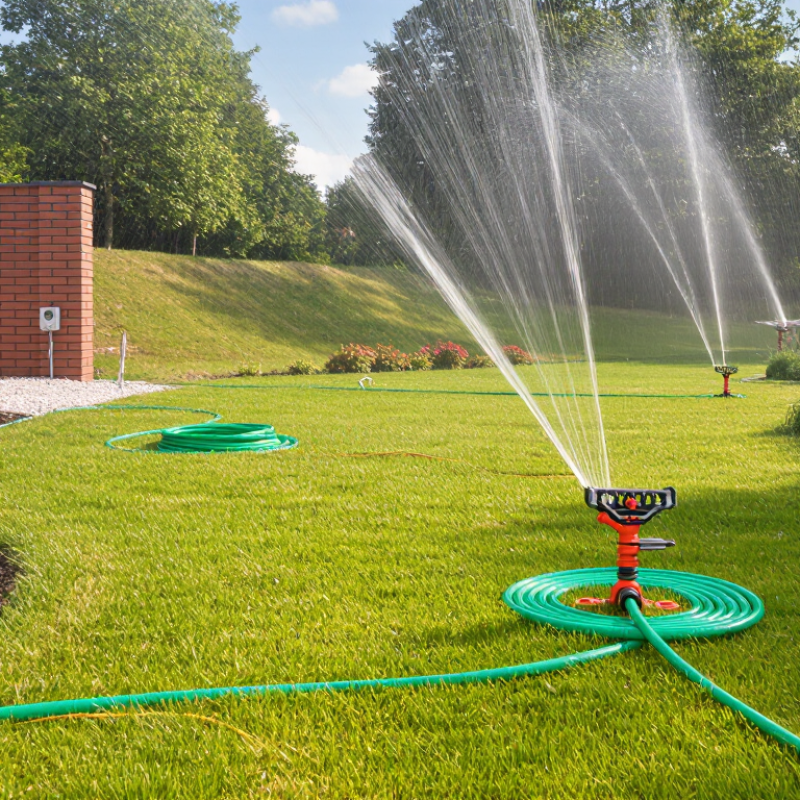
10 Best Lawn Irrigation Equipment for 2026

Understanding Lawn Irrigation Equipment and How It Works

Lawn irrigation equipment moves water from a supply line to the soil in measured amounts. A typical setup includes a timer, valves, pipes, and sprinklers or drip tubing. The timer signals a valve to open, sending water through the selected zone. Then the valve closes. Simple in theory.

Sprinklers spread water across open turf, while drip lines deliver it near plant roots. Spray patterns and flow rates differ, so matching equipment to lawn shape matters. A narrow strip beside a driveway may need a different arrangement than a broad, sunny patch. Check the spray on a calm day: heads should overlap lightly, without soaking pavement or siding. Uneven coverage can leave dry crescents that are easy to miss.

Good operation depends on more than a timer setting. Soil type, slope, shade, and recent rainfall all affect how quickly water reaches roots. Sandy soil drains fast; compacted clay may puddle. Shorter cycles with pauses can help water soak in, though the right schedule takes adjustment. I would not trust a fixed schedule all season. Weather changes, and a clogged nozzle can quietly reduce coverage. Inspect filters, flush lines, and watch for leaks near valves. A damp patch that persists may signal a problem, not healthy turf.
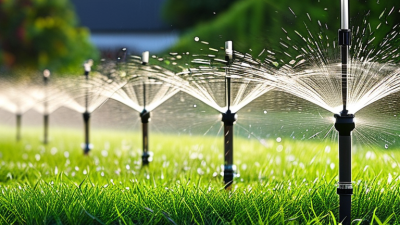
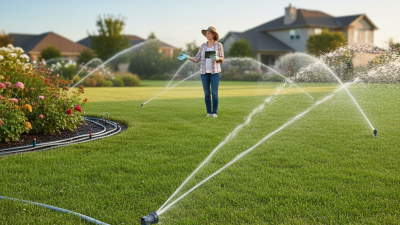
Key Features to Compare When Choosing Irrigation Equipment

Compare irrigation equipment by how well it fits your lawn, water supply, and daily routine. Measure the area before choosing. A narrow side yard may need adjustable spray patterns, while a broad, open lawn benefits from even coverage across longer distances. Check the stated operating pressure against your water source; weak pressure can leave dry crescents near sprinkler heads. Coverage claims are estimates. Wind, slopes, and nearby trees can change the result.

Look closely at controls and installation. A timer with separate schedules for different zones can prevent shaded beds from receiving the same watering as sunny turf. Rain sensors may pause watering after showers, but placement matters: a sensor beneath an eave may stay dry. Drip lines suit planting beds and shrubs, while sprinklers are generally more practical for continuous grass. Check hose or pipe connections, filter access, and whether replacement parts are easy to obtain.

Durability matters. UV-resistant materials and sturdy fittings can handle repeated outdoor exposure, though no component is maintenance-free. Inspect filters and spray openings during the season; grit can reduce flow before a problem is obvious. A useful test is simple. Set out several shallow containers, run the system, and compare collected water. Uneven results may call for repositioning, not a stronger unit. It is tempting to trust the box measurements alone. I would still recheck coverage after installation, because real lawns rarely behave like tidy diagrams.

10 Best Lawn Irrigation Equipment for 2026 - Key Features to Compare When Choosing Irrigation Equipment

Compare common irrigation equipment by coverage, typical operating needs, and practical use. Actual performance depends on water pressure, nozzle selection, layout, and site conditions.
Equipment Type Typical Coverage or Application Key Features Best Suited For What to Compare Potential Limitation
Oscillating Sprinkler Rectangular lawn areas; coverage varies by model and water pressure. Side-to-side spray across multiple jets; many models offer adjustable width and range. Small or medium rectangular lawns and temporary watering. Adjustability, hose connection, spray pattern, and minimum operating pressure. Wind can distort the spray, and edges may receive uneven watering if settings are not adjusted.
Impact Sprinkler Circular or part-circle coverage; radius depends on nozzle and pressure. Rotating spray arm; many units allow arc and distance adjustment. Open lawn areas where a rotating spray pattern is practical. Arc adjustment, nozzle options, mounting style, and stated pressure range. The spray may be less suitable near walls, narrow strips, or noise-sensitive areas.
Rotary Hose-End Sprinkler Broad circular coverage for open areas. Rotating arms distribute water over a wide area; usually connects to a garden hose. Occasional watering of unobstructed lawns. Coverage adjustability, stability, flow needs, and ease of repositioning. Coverage can be affected by wind, and water may reach paths or nearby planting beds.
Gear-Drive Rotor Head Designed for larger zones; throw distance depends on nozzle, pressure, and spacing. Pop-up head with a rotating stream; arc and radius are commonly adjustable. In-ground systems serving medium to large lawn areas. Matched precipitation rates, nozzle options, pressure requirements, and serviceability. Needs careful zone design and head-to-head coverage to avoid dry gaps.
Fixed Spray Head Shorter-range coverage for small zones and lawn edges. Stationary spray pattern; available with different arcs and spray distances. Small, narrow, or irregular sections in an in-ground system. Nozzle pattern, spacing, pressure regulation, and compatibility with the system layout. Spray can be sensitive to wind; using too many heads on one zone can reduce performance.
Rotary Nozzle Longer-range rotating streams, often used on compatible spray bodies. Multiple rotating streams apply water more slowly than many conventional spray nozzles. Sloped or compacted areas where slower application may help reduce runoff. Compatibility, operating pressure, arc options, and precipitation-rate matching. Requires correct pressure and layout; it is not automatically suitable for every existing spray system.
Dripline Tubing Water delivered along planted rows or defined bed areas. Built-in emitters release water close to plant roots; filter and pressure regulation are commonly needed. Garden beds, borders, and landscapes adjoining a lawn. Emitter spacing, flow rate, filtration, pressure regulation, and ease of flushing. Usually not the most practical choice for evenly watering broad, open turf areas.
Soaker Hose Low-pressure watering along the hose length. Porous hose releases water gradually; can be laid along planting rows or borders. Small beds and targeted watering around plants. Hose length, connection pressure, layout, and ability to keep the hose in place. Water distribution may become less even over long runs or where pressure varies.
Hose-End Watering Timer Automates a hose-connected sprinkler or drip setup. Schedules watering without a permanent in-ground controller; features vary by model. Temporary or small-scale irrigation systems. Number of outlets, schedule flexibility, manual controls, power source, and connection type. It controls timing but does not verify that plants received the intended amount of water.
Rain Sensor or Soil-Moisture Sensor Pauses or adjusts a compatible irrigation system based on detected conditions. Can help prevent scheduled watering after rainfall or when soil moisture is sufficient. Systems with a compatible controller and changing weather or soil conditions. Controller compatibility, sensor placement, settings, and maintenance requirements. Readings depend on sensor placement and settings; a sensor does not replace sound irrigation scheduling.

The 10 Best Lawn Irrigation Equipment Options for 2026

Choosing lawn irrigation equipment for 2026 starts with lawn shape, water pressure, and soil type. No single setup suits every yard. An oscillating sprinkler covers rectangular areas with a moving fan of water. A rotary sprinkler sends slower streams across larger lawns. An impact sprinkler works well in open spaces but can be noisy. A stationary sprinkler is simple for small patches.

Drip tubing delivers water near garden borders and trees, while a soaker hose seeps along planting beds. A hose-end timer automates basic watering without a complex setup. A smart irrigation controller can adjust schedules using local weather data. A soil moisture sensor checks whether roots need more water. A rain sensor pauses watering after rainfall. A filter and pressure regulator can protect drip systems from debris and uneven flow. These are ten practical options, not a fixed ranking; compatibility matters.

Tips: Measure the area before buying, and check your tap’s pressure. Run each zone for a few minutes, then look for dry strips or puddles. Small adjustments often help more than adding another sprinkler. It is easy to overwater while trying to fix one dry corner.

Matching Irrigation Equipment to Lawn Size and Water Needs

Matching irrigation equipment to lawn size begins with measuring the area, not choosing the biggest sprinkler. For a compact, level lawn, a hose-end oscillating sprinkler can cover evenly without permanent installation. Medium lawns often need several spray or rotor zones; large or irregular yards may benefit from in-ground zones designed around pressure and flow. Measure water output with a rain gauge. A dry corner beside a soaked path is a warning.

Soil and slope matter as much as square footage. Clay absorbs water slowly, while sandy soil drains quickly; steep ground may need shorter watering cycles to limit runoff. The U.S. Environmental Protection Agency’s WaterSense program estimates that landscape irrigation uses nearly one-third of U.S. residential water, or almost 9 billion gallons daily. It also warns that as much as half may be lost through evaporation, wind, or poor scheduling. That makes a matched setup more useful than simply adding sprinklers.

Choose heads with overlapping coverage, then check pressure and flow before dividing the lawn into zones. A smart irrigation controller can adjust watering to local weather, but it cannot fix misplaced heads or blocked nozzles. Check the edges by hand. I would treat any coverage estimate as a starting point; tree shade, compacted soil, and changing seasons can alter what the lawn actually needs. The fit is rarely perfect.

Installation, Efficiency, and Maintenance Considerations

Choosing lawn irrigation equipment for 2026 starts with the site, not the catalog. Measure water pressure and flow before selecting valves, pipes, or sprinkler heads. Low pressure can leave dry stripes, while excessive pressure may create fine mist that drifts away. Match head spacing to the manufacturer’s stated range, and divide areas with different sun exposure or soil into separate zones. Sloped lawns need shorter watering cycles to reduce runoff. Small details matter.

Installation affects both efficiency and future repairs. Bury pipes below the usual mowing depth, but keep valve boxes accessible. Flush new lines before attaching nozzles; grit can clog them quickly. I once underestimated a narrow side yard, and one overspray pattern soaked the fence instead of the grass. It was an avoidable mistake. Check coverage with shallow containers placed across each zone, then adjust heads until water reaches the lawn evenly without hitting paths.

Tips: Water early in the morning, and adjust schedules after rain. Inspect filters, nozzles, and visible connections monthly during the watering season. Look for soggy patches, weak spray, or unusually green strips; each can point to a leak or blockage. At season’s end, follow local winterizing guidance, especially where pipes may freeze.