Best Garden Sprinkler Systems for Your Lawn Needs?
Creating a lush, green lawn is a gardener's dream. To achieve this, choosing the right garden sprinkler is essential. A good sprinkler system delivers water evenly and efficiently, ensuring every corner of your lawn receives care. There are many options available, each with its benefits and drawbacks.
When selecting a garden sprinkler, consider the size of your lawn. A small yard may only need a simple, oscillating sprinkler. Larger spaces might benefit from more complex systems, offering timed irrigation. However, some systems may require more maintenance, which could be a hassle for busy homeowners.
Remember, a garden sprinkler is not a one-size-fits-all solution. You must assess your needs and the water requirements of your plants. Research different systems to find the best fit. Emphasizing these details will aid in making an informed choice, but even the choices can be overwhelming. Reflect on what truly serves your garden's needs.
Understanding Different Types of Garden Sprinkler Systems Available
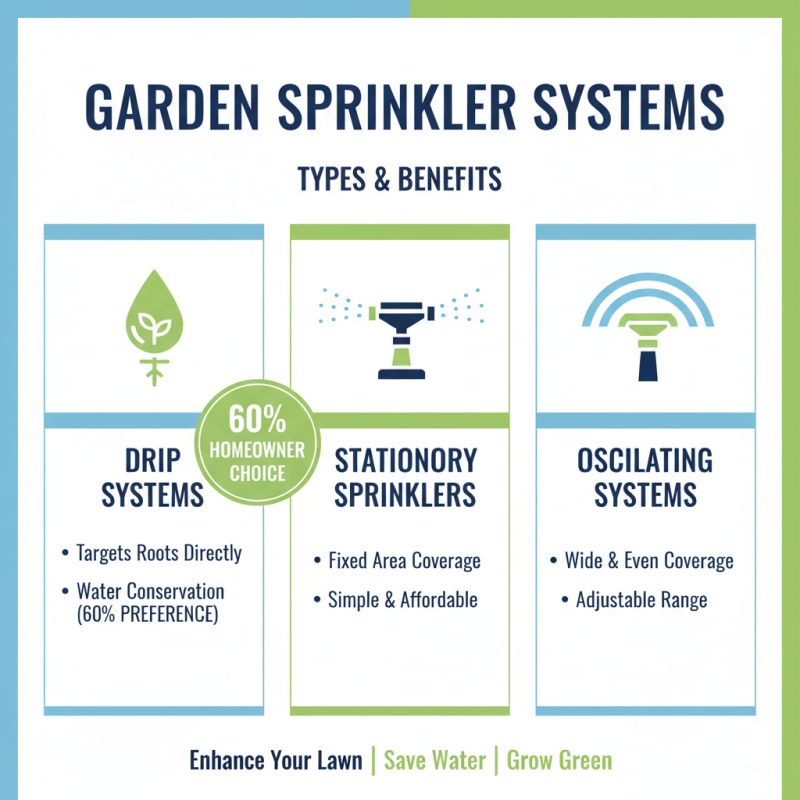
Choosing the right garden sprinkler system can greatly enhance your lawn. Various types are available to meet different needs. Mainly, they include drip systems, stationary sprinklers, and oscillating systems. According to industry reports, about 60% of homeowners prefer drip systems for their efficiency. These systems target the roots directly, conserving water and reducing evaporation.
Stationary sprinklers work well for smaller areas. They are easy to set up and very cost-effective. However, they may require manual adjustments as the lawn grows. Oscillating systems offer wider coverage. They suit larger lawns but need a water pressure of at least 30 psi to operate correctly.
Tips: Test your water pressure before purchase. Knowing your lawn’s size helps choose the right system. Inspect regularly for leaks. Small drips can lead to larger issues over time. Finding the best fit for your yard may take extra time. Evaluate your lawn's needs carefully before making a decision.
Key Factors to Consider When Choosing a Sprinkler System for Your Lawn
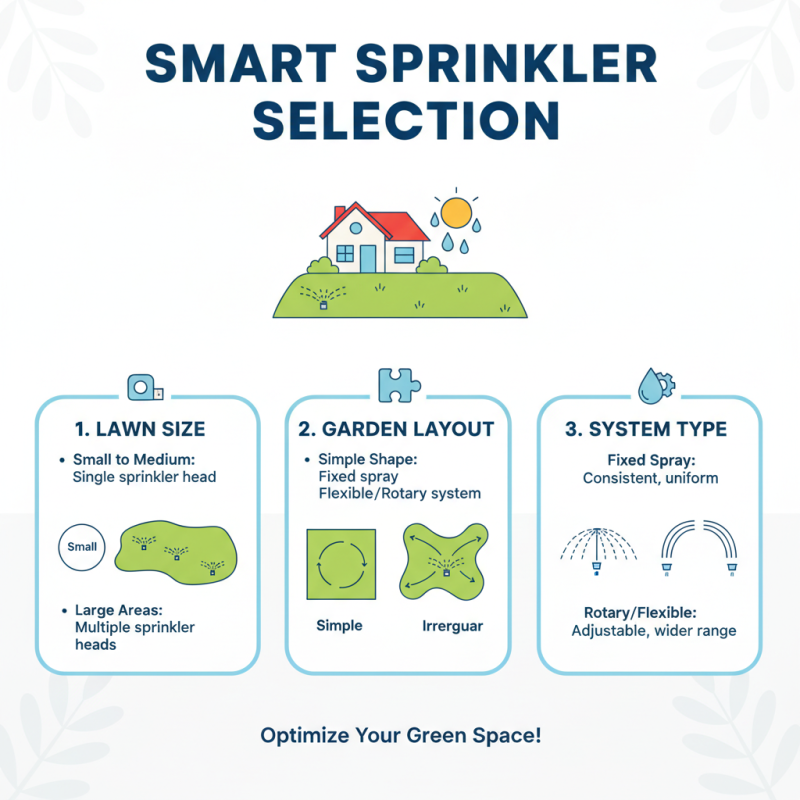
When selecting a sprinkler system for your lawn, consider the size and layout of your garden. Large areas may require multiple sprinkler heads. Think about the shape of your lawn, too. If it’s irregular, a flexible system might be needed.
Tips: Measure your lawn accurately. Take note of any obstacles like trees or pathways. This helps in efficient water distribution. Check your water pressure. Low pressure can affect the performance of your chosen system.
Another important factor is the type of irrigation system. Drip systems are great for flower beds. They deliver water directly to roots, minimizing waste. Sprinklers are better for open lawns. Automatic timers can save you time. They ensure watering is done at optimal times, reducing evaporation.
Tips: Don’t forget to adjust your system based on rainfall. Overwatering can harm your plants. Constantly monitor your lawn’s condition. Adjust settings as necessary. Regular maintenance is crucial too. Check for leaks to avoid water loss.
Performance Metrics: Assessing Coverage Area and Water Efficiency
When evaluating garden sprinkler systems, coverage area and water efficiency are crucial metrics. Studies show that an efficient sprinkler system can reduce water usage by up to 50%. Yet, many homeowners still overwater their lawns, leading to wastage. The recommended coverage radius for typical lawn sprinklers is between 15 to 30 feet. Systems should ideally cover every inch of the lawn without overlap.
Water efficiency is vital for sustainability. According to recent industry reports, an estimated 40% of residential water use goes to irrigation. Many systems fail to utilize rain sensors or timers. These components can save significant amounts of water. Data shows that using smart controllers can increase efficiency by 30%. Understanding how your sprinkler interacts with your lawn is essential.
It’s worth noting that not all systems perform equally. Testing a system’s performance after installation is often overlooked. Homeowners may forget to check for uneven water distribution. Regular audits can reveal hidden issues. Adjustments might be necessary to optimize performance. Investing in better technology can make a commendable difference in long-term water conservation.
Comparative Analysis: Cost-Effectiveness of Various Sprinkler Options
Choosing the right garden sprinkler system can greatly influence both the health of your lawn and your water bills. A recent industry report suggests that over 50% of homeowners struggle with this decision. Many seek cost-effective solutions that don't compromise on performance.
Among various sprinkler systems, drip irrigation stands out for its efficiency. It can reduce water usage by up to 30% compared to traditional overhead sprinklers. However, installation costs can be high. Homeowners often overlook maintenance, which can impact long-term savings. Ignoring simple repairs leads to wasted resources and increased expenses.
**Tip:** Regularly check for leaks in your system to avoid unnecessary water loss.
A comparative analysis shows that while automatic systems offer convenience, their initial costs can be daunting. The average installation can range from $2,000 to $4,000. Yet, they may provide savings over time through reduced water waste. Still, some homeowners feel they can manage without automation, which leads to underperformance in watering schedules.
**Tip:** If simplicity is your goal, consider a timer-based manual system to balance cost and function.
Cost-Effectiveness of Various Garden Sprinkler Systems
Maintenance Requirements for Optimal Functioning of Sprinkler Systems
Proper maintenance is essential for a garden sprinkler system to function optimally. Regularly check for clogs in the sprinkler heads. Sometimes, debris can block the flow of water. Clean the heads with a small brush or flush them with water. This will help ensure even distribution and eliminate dry patches in your lawn.
Inspecting the system's timer is also crucial. A malfunctioning timer can lead to overwatering or underwatering. Adjust the settings according to seasonal changes. This attention to detail can prevent root rot or lawn stress. Don’t forget to monitor the water pressure. Too high a pressure can damage the system.
Many people overlook winterization, especially in colder climates. Failing to drain your system can lead to freezing and bursting pipes. It’s an easy step that’s often neglected. A little time spent on maintenance can save a lot of trouble later on. Remember, even well-designed systems need care to work efficiently.
Best Garden Sprinkler Systems for Your Lawn Needs
| Sprinkler Type |
Coverage Area (sq ft) |
Water Pressure (psi) |
Maintenance Requirement |
Average Lifespan (years) |
| Rotary Sprinkler |
5000 |
40-60 |
Moderate; adjust settings seasonally |
10-15 |
| Oscillating Sprinkler |
3000 |
30-50 |
Light; clean filter regularly |
5-10 |
| Soaker Hose |
Variable |
Low (10-30) |
Minimal; check for clogs |
3-7 |
| Drip Irrigation |
Dependent on layout |
Low (10-25) |
Light; replace emitters as needed |
5-10 |
| Spray Sprinkler |
2500 |
20-50 |
Moderate; inspect nozzles frequently |
5-12 |