2026 Best Garden Sprinkler Head Types for Global Buyers
Choosing the right Garden Sprinkler Head in 2026 requires more than comparing prices or spray distances. Global buyers face different climates, water pressures, soil textures, connection standards, and maintenance conditions. A head that performs evenly in a California lawn may struggle in a windy coastal garden or a small greenhouse. The details matter. Tiny droplets can drift. Poor spacing can leave dry stripes.
Dr. Charles M. Burt, founder of the Irrigation Training and Research Center, describes the core principle clearly: “Irrigation is the controlled application of water.” This idea guides every reliable sprinkler selection. The best Garden Sprinkler Head should match the landscape’s size, pressure, flow rate, plant needs, and local water priorities. Rotary heads suit larger areas and slower application. Fixed spray heads may work better around narrow beds. Drip-compatible systems can reduce overspray near walls and pathways.
Real testing still matters. Product labels are useful, but they cannot reveal every field condition. Measure pressure at the installation point. Check the spray pattern on a windy afternoon. Watch for puddles after ten minutes. Small mistakes become expensive.
This guide compares the main Garden Sprinkler Head types for international buyers, including pop-up sprays, rotary models, impact heads, gear-driven rotors, and specialty options. It also considers durability, nozzle control, filtration, replacement parts, and installation compatibility. Some recommendations will remain conditional. That is honest. Irrigation is never perfectly universal. A careful buyer checks local requirements before choosing equipment.
What Is a Garden Sprinkler Head and How Does It Work?
A garden sprinkler head is the outlet that spreads water across soil, grass, or planting beds. It converts pressurized water into controlled droplets. The body usually contains a nozzle, filter, adjustment ring, and connection thread. Inside, pressure pushes water through a narrow opening. The nozzle shape controls the spray pattern, distance, and flow rate. When the valve opens, water enters the head and begins distribution.
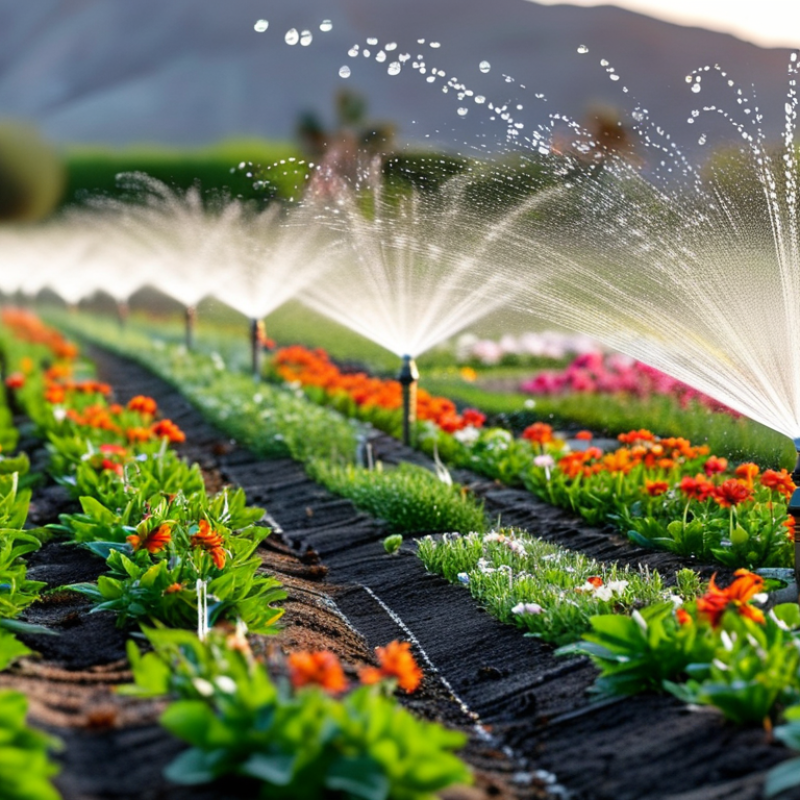
Different heads manage water in different ways. A fixed spray head covers a steady fan-shaped area. A rotary head turns slowly and sends narrow streams across a wider circle. An impact head uses a moving arm, creating a distinctive clicking motion. Gear-driven designs rotate more quietly, but they can react badly to dirty water. Small particles may block internal passages.
Coverage depends on pressure, nozzle size, soil absorption, and wind. A product rated for eight meters may perform poorly beside a wall or on sloped ground. Global buyers should check thread standards, flow units, pressure requirements, and replacement nozzle availability. Metric and imperial connections are not always interchangeable. A simple filter can prevent many failures. Still, filters need cleaning. A neglected filter can reduce spray distance within weeks.
Pressure charts are useful, but they are not the whole story. A system can look efficient on paper and leave dry patches in real weather. Place heads so their spray areas overlap slightly, then inspect the soil after watering. Damp soil near the nozzle does not prove even coverage.
How to Compare Major Sprinkler Head Types for Different Gardens
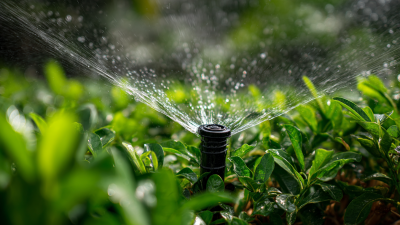
Fixed spray heads suit small lawns and narrow planting beds. They deliver water quickly over short distances. Their fine spray can wet flower borders evenly, but wind may carry droplets away.
Rotor heads work better for larger gardens. Their rotating streams cover wider areas and usually apply water more slowly. This helps reduce runoff on sloped soil. Impact heads can also cover large spaces, especially where water pressure changes. However, their visible arm movement may disturb quiet residential gardens. For shrubs and containers, adjustable micro-sprays offer more control. Drip emitters are often more efficient, but they are not technically sprinkler heads. That distinction matters when comparing irrigation systems.
Tips: Measure pressure first. Low pressure can weaken every pattern. Check the soil after watering, not only the surface. A dry layer below the mulch reveals poor penetration. Match each head’s application rate with nearby heads. Mixing fast sprays and slow rotors in one zone often creates uneven growth. In windy locations, choose larger droplets and shorter watering cycles. I have seen carefully planned layouts fail because trees blocked the pattern. Recheck coverage after seasonal growth. Perfect spacing on paper is not always practical in a living garden.
Which Sprinkler Heads Suit Lawns, Beds, Shrubs, and Large Landscapes?
2026 Best Garden Sprinkler Head Types for Global Buyers
Which Sprinkler Heads Suit Lawns, Beds, Shrubs, and Large Landscapes?
Choosing a sprinkler head starts with the planted area, not the catalogue photograph. Lawns need even coverage across open soil. Small, narrow lawns often suit pop-up spray heads with adjustable arcs. Wider lawns usually perform better with rotating or gear-driven heads. They distribute water farther and reduce the number of fixtures. Keep it simple. Match each head’s precipitation rate within the same zone.
Flower beds require gentler application. Drip emitters or low-volume micro-sprays place water near roots and reduce wet foliage. Shrubs often need bubblers or adjustable low-volume heads, especially when roots sit under mulch. I have seen attractive beds fail because one spray head watered leaves while another missed the root zone. The layout looked correct. The moisture pattern was not.
Large landscapes need durable rotating heads, pressure regulation, and careful spacing. Wind, slope, soil texture, and available pressure can change the result.
The U.S. EPA WaterSense program reports that outdoor irrigation can represent more than 30% of household water use. FAO AQUASTAT reports agriculture accounts for about 70% of global freshwater withdrawals, reinforcing the value of efficient application.
These figures are not garden-specific, but they support a practical decision: select low-volume heads where possible. Measure pressure first. Check infiltration after installation. A perfect radius can still create runoff.
How Water Pressure, Coverage, and Installation Affect Sprinkler Choice
2026 Best Garden Sprinkler Head Types for Global Buyers
Choosing a garden sprinkler head starts with water pressure, not appearance. During site checks, I have seen attractive heads perform poorly because pressure dropped under real demand. Measure dynamic pressure while other outlets are running. Static pressure alone can mislead. Low pressure suits gentle fixed-spray heads, while stronger pressure supports rotating or gear-driven models. Coverage also depends on radius, spray angle, wind, and plant height. A narrow lawn may need strip patterns, while a wide bed may require adjustable rotary coverage. Avoid selecting by advertised distance alone.
Tips: Test one installed head before ordering a full set. Mark its wetting pattern after ten minutes. Leave a small overlap between nearby patterns. Check flow rate in litres per minute and compare it with your pump capacity. It is a simple step.
Installation can change performance more than the head type. Use compatible thread sizes, stable risers, and clean filters. Uneven ground may need adjustable-height fittings. In sandy areas, filtration deserves extra attention. For sloped gardens, lower-precipitation heads can reduce runoff. I once underestimated wind exposure and chose a pattern that looked efficient on paper. Water drifted onto a walkway instead. That mistake still matters when reviewing product specifications. Global buyers should verify metric measurements, replacement availability, and local plumbing requirements before purchase. A technically suitable head is not always practical after installation.
What Should Global Buyers Check Before Purchasing Sprinkler Heads?
Global buyers should inspect site conditions before comparing sprinkler head catalogs. A head that performs well in Spain may fail in a dusty farm. Measure static pressure and operating pressure at the farthest outlet. Record flow rate, pipe diameter, thread standard, and available water hours. Do not trust pump labels alone. Field readings are better. Also map the area. Wind, slope, soil texture, and plant height affect the spray pattern. A narrow garden may need adjustable arcs, while broad beds often need matched precipitation rates. I have seen uneven turf caused by mixing heads that looked similar but delivered different volumes. It was an avoidable error.
Check body material, seal quality, filter access, and resistance to ultraviolet exposure, fertilizer, and freezing temperatures. Stainless steel and engineered polymers suit different environments, but neither is automatically superior. Ask for pressure-flow charts, radius data, and tested distribution patterns. Verify whether measurements use metric or imperial units. This detail causes surprising purchasing mistakes. Confirm the connection standard before ordering. For international shipments, review local water regulations, safety documents, and installation requirements. Independent test reports add credibility when catalog claims seem too perfect.
Before purchasing, calculate maintenance time, not only the unit price. Heads should be easy to clean without removing buried fittings. Check nozzle availability and packaging protection. Request samples for large projects. Test them with actual water. Watch for leaks, blocked filters, drifting spray, and pressure loss. I would leave extra room for unknown conditions; soil and water quality rarely match the specification sheet exactly. Cheap parts can become expensive after repeated labor. The final choice should fit the site, installer skills, and available cross-border support.
2026 Best Garden Sprinkler Head Types for Global Buyers
Typical wetted diameter ranges help buyers compare sprinkler head types before checking pressure, flow rate, connection size, material, filtration needs, and local water conditions.
Coverage depends on nozzle size, operating pressure, spacing, wind, and water quality. Confirm the manufacturer’s performance table and ensure the available flow rate matches the irrigation design.