Why Choose a Rotating Sprinkler for Efficient Watering?
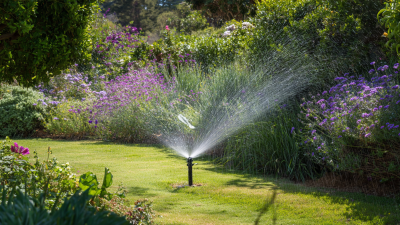
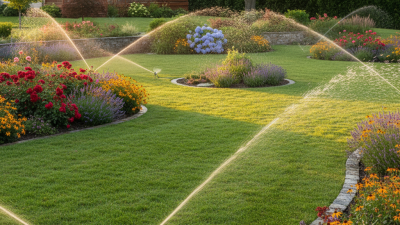
In today's world, water conservation is essential. A rotating sprinkler can significantly enhance your watering efficiency. It utilizes advanced technology to ensure uniform coverage. Unlike traditional sprinklers, a rotating sprinkler distributes water more evenly over the area. This results in better soil moisture levels.
Many homeowners face challenges with uneven watering. They often spend too much time and resources maintaining their gardens. A rotating sprinkler resolves these issues effortlessly. It creates a gentle spray that penetrates deeply into the soil, promoting root growth. Gardeners appreciate its reliability in various weather conditions.
Investing in a rotating sprinkler is a smart choice. It saves both time and water. However, it's crucial to assess your garden's specific needs. Consider factors like size and plant types. Reflect on how watering habits impact your garden's health. A rotating sprinkler might be the solution you’ve been searching for. With its efficiency, it could transform your watering routine.
Benefits of Using Rotating Sprinklers for Garden Watering
When it comes to garden watering, rotating sprinklers offer several key benefits. Studies indicate that about 30% of residential water usage goes to irrigation. The right sprinkler can significantly reduce this waste. Rotating models distribute water evenly across the landscape. Their design allows for a wider coverage area while ensuring that every corner of your garden receives adequate moisture.
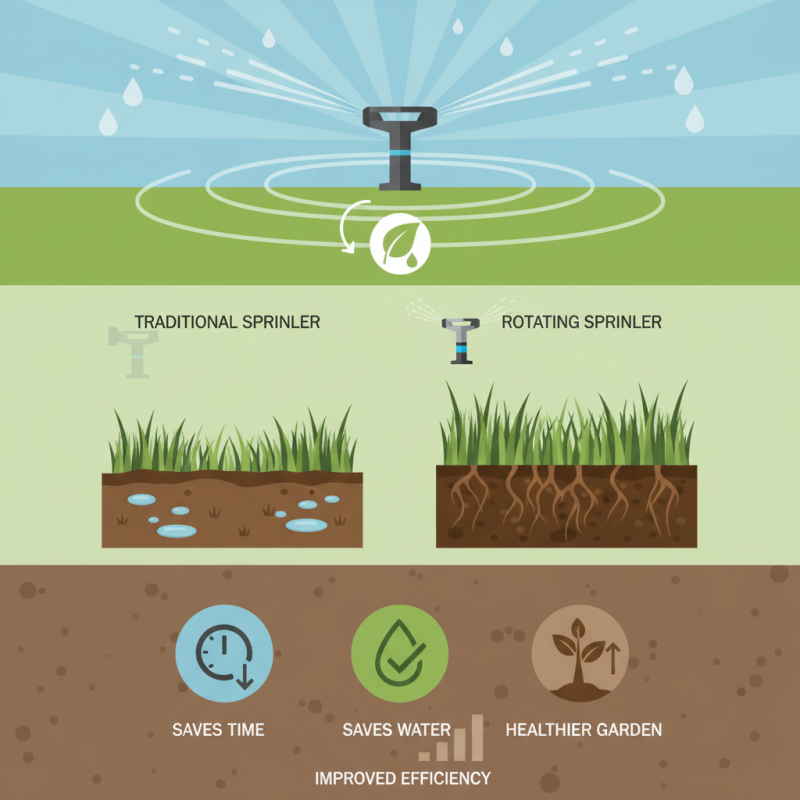
Efficiency is vital in garden irrigation. Reports show that rotating sprinklers can use up to 30% less water than traditional spray systems. They achieve this through a gentle, controlled rotation, which minimizes runoff. Unlike stationary sprinklers that may oversaturate one spot, rotating sprinklers ensure even distribution, conserving both water and time. This efficiency encourages healthy plant growth, reducing the risk of diseases caused by overwatering.
Adopting a rotating sprinkler system requires some consideration. Initial costs may be higher than simpler solutions. Users must also assess local climate conditions. Some gardeners may find adjusting the settings challenging, especially in varying weather conditions. However, the long-term savings and healthier gardens often outweigh these issues. Investing in a rotating sprinkler can lead to a more sustainable approach to gardening.
How Rotating Sprinklers Enhance Water Efficiency and Conservation
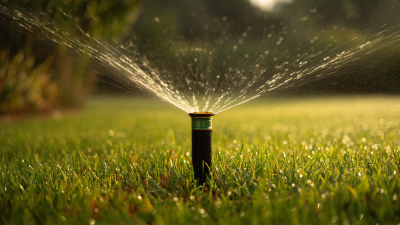
Rotating sprinklers offer a unique solution to efficient watering. They operate by distributing water in a circular pattern, which allows for a more even coverage. This reduces water waste and the chance of dry spots in your garden. Many homeowners find that traditional fixed sprinklers leave certain areas too wet or too dry. In contrast, rotating sprinklers can adjust their speed and coverage, adapting to various garden shapes and sizes. This makes them a perfect choice for both small yards and expansive landscapes.
Water efficiency is critical, especially in areas experiencing drought. Rotating sprinklers use less water, yet maintain lush greenery. They minimize runoff and evaporation by delivering water close to the roots of the plants. Observing how these sprinklers function can reveal areas for improvement. Perhaps they could rotate slightly faster for better coverage. Some gardeners find that adjusting the direction can enhance performance, leading to even more water savings. The challenge lies in finding that optimal setting, but experimenting can lead to rewarding results.
Key Features of Rotating Sprinklers for Optimal Coverage
Rotating sprinklers are a great choice for efficient watering. They provide optimal coverage by using a rotating spray pattern. This feature allows water to reach all areas of your garden, ensuring that no plant is left thirsty. Many models have adjustable arc settings. You can easily customize the watering area to suit your specific garden layout.
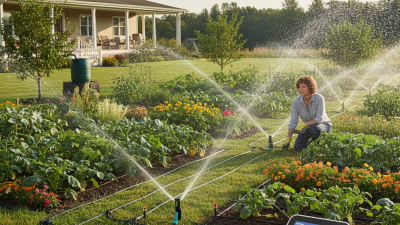
To enhance your watering efficiency, consider the spacing of your sprinklers. Placing them too far apart may lead to dry patches. On the other hand, too close can cause overwatering, leading to runoff. Aim for a uniform overlap in coverage. A well-planned sprinkler layout promotes healthy growth for your plants.
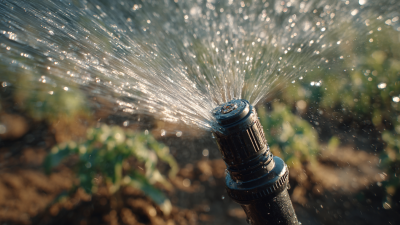
Tip: Regular maintenance is crucial. Clean the nozzles periodically to prevent clogging. This simple action can extend the life of your sprinkler and improve water distribution. Observation is key—watch how your plants respond. Are some areas getting too much or too little water? Fine-tuning your setup will lead to better results over time. Remember, the best sprinkler system is one that adapts to your garden's needs.
Comparing Rotating Sprinklers with Other Watering Methods
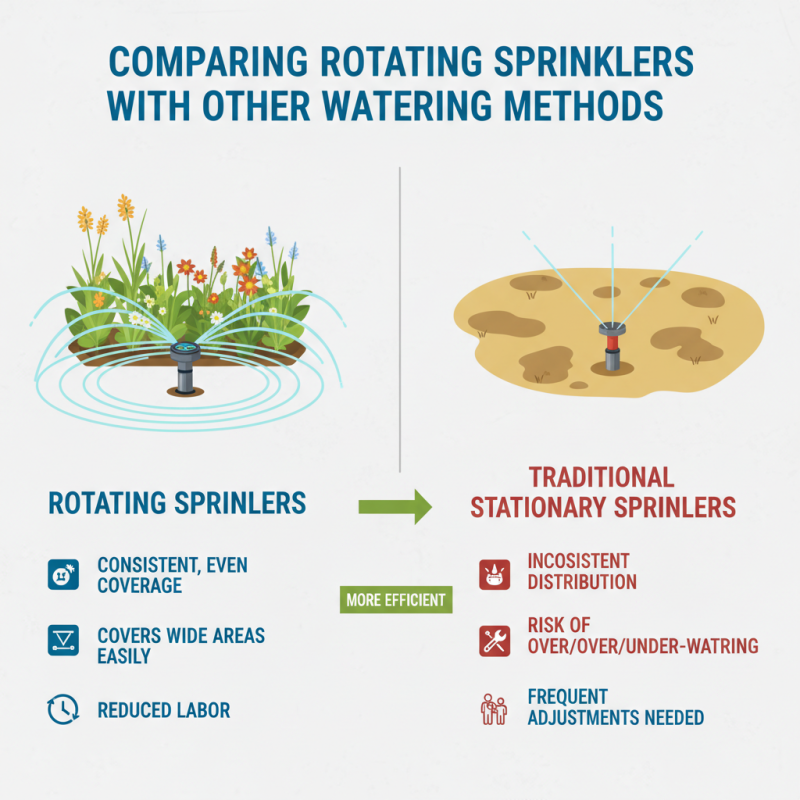
When considering watering methods, rotating sprinklers stand out for their efficiency. They offer a consistent and even distribution of water. In contrast, traditional stationary sprinklers can leave dry patches. This inconsistency can lead to either over-watering or under-watering certain areas of your garden. Rotating sprinklers make it easy to cover wider areas without the need for frequent adjustments, reducing labor time.
Tips: Ensure your rotating sprinkler is positioned correctly to avoid wetting sidewalks. This not only saves water but also keeps your garden healthier.
Using hoses or manual watering can also lead to uneven moisture levels. These methods require constant attention. They may not deliver water to the roots where it's most needed. A rotating sprinkler can adapt to different garden shapes, making it a versatile option. Sometimes, you may find that a rotating sprinkler does not cover every spot perfectly. Reflecting on its coverage can help you adjust the setup or combine it with other watering techniques.
Tips: Check the rotation speed and coverage area. Adjust based on your garden's unique layout. Proper positioning can enhance effectiveness greatly.
Tips for Installing and Maintaining Rotating Sprinklers Effectively
Installing and maintaining rotating sprinklers requires careful planning and attention to detail. Begin by selecting the right location in your garden. Check for any obstacles like trees or walls that may block the spray. A well-placed sprinkler can cover more area efficiently. While installing, ensure the sprinkler is level. Any tilt can lead to uneven watering, wasting water in some parts and underwatering others.
Regular maintenance is crucial for optimal performance. Inspect your sprinkler system periodically for any clogs or damage. Clean the nozzles regularly to maintain an even flow. If you notice wet or dry patches in your lawn, it may indicate an issue with the sprinkler's coverage. Adjust the spray pattern if necessary. Always remember, over-watering can lead to root rot, while under-watering can damage plants. Regular checks can prevent these problems.
It’s important to reflect on how weather conditions affect watering needs. During cooler months, you might need less watering. Conversely, in hotter periods, adjusting the frequency is crucial. Experiment with different settings until you find the ideal balance for your garden. Efficiency is key, but so is being mindful of your specific watering needs.
Why Choose a Rotating Sprinkler for Efficient Watering? - Tips for Installing and Maintaining Rotating Sprinklers Effectively
| Feature |
Description |
Benefits |
| Water Coverage |
Rotating sprinklers provide a wider coverage area with an adjustable radius. |
Efficient distribution of water, reducing the risk of overwatering or underwatering. |
| Adjustable Spray |
Many rotating sprinklers allow for customizable spray patterns and angles. |
Targeted watering for specific areas, enhancing water conservation. |
| Durability |
Constructed from weather-resistant materials designed to last. |
Long-term investment with lower replacement costs. |
| Ease of Use |
Simple setup and operation, often requiring minimal technical skill. |
Convenient for both novice and experienced gardeners. |
| Installation |
Can be easily installed in various ground types with basic tools. |
Saves time and ensures optimal watering efficiency. |
| Maintenance |
Requires occasional cleaning to prevent clogs and ensure functionality. |
Increases lifespan and consistent performance of the sprinkler. |