How to Choose the Best Agricultural Water Sprinkler for Your Needs?
Choosing the right agricultural water sprinkler can significantly impact your farming success. The variety of options available may overwhelm you. This guide aims to simplify your decision-making process.
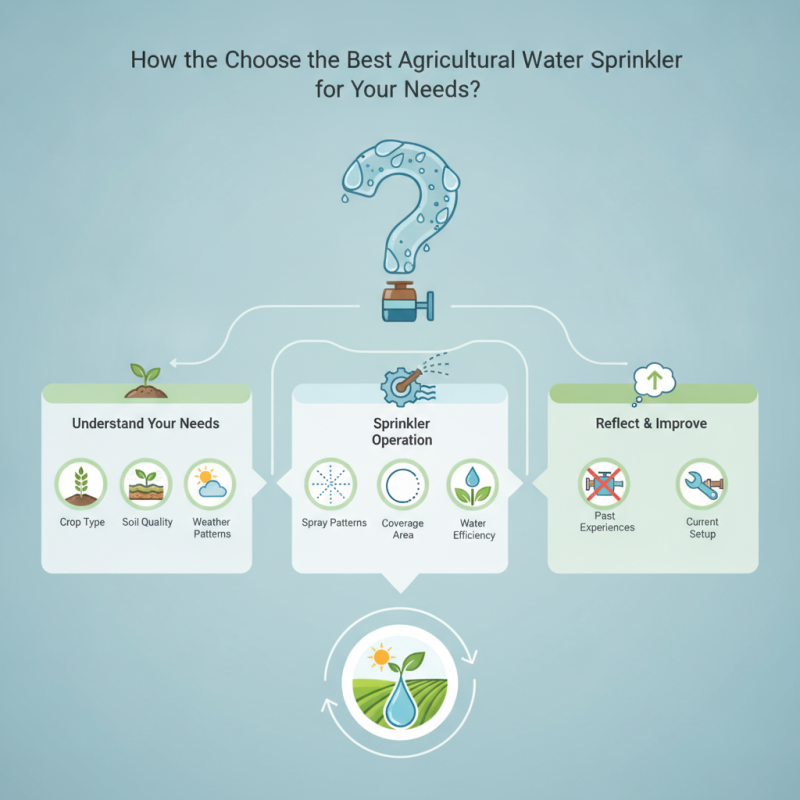
Understanding your specific irrigation needs is crucial. Factors such as crop type, soil quality, and weather patterns play a vital role. Consider how each agricultural water sprinkler operates. Spray patterns, coverage area, and water efficiency should be your focus. These elements influence both yield and resource management.
It's important to reflect on your past experiences with irrigation. Have they been effective? Are there areas for improvement? Assessing your current setup can shed light on better choices. Selecting the best agricultural water sprinkler is not just about efficiency. It’s also about achieving sustainable farming practices for the future.
Understanding Different Types of Agricultural Water Sprinklers
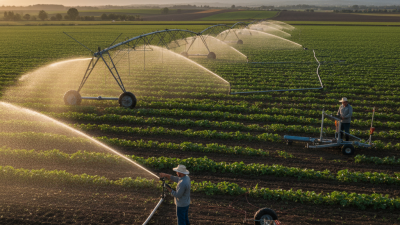
When selecting an agricultural water sprinkler, understanding the various types is crucial. Generally, there are three main categories: stationary, portable, and automated systems. Stationary sprinklers, often fixed in place, provide consistent coverage. They are ideal for larger fields. However, they require careful planning for placement. Portable sprinklers offer flexibility. They can be moved to different locations as needed. This can be beneficial for variable crop types, but it may take more labor to manage.
Automated sprinkler systems represent technological advancements in agriculture. These systems are often precise and can be programmed for various conditions. However, they require an initial investment and regular maintenance. The reliability of the system is dependent on technology. Irregularities in performance can occur due to equipment failures. It’s vital to stay informed about potential breakdowns and develop contingency plans.
Farmers should assess their unique needs before making a decision. Factors such as crop type, field size, and water source play significant roles. Each sprinkler type has trade-offs. Some solutions may not address every situation. Evaluating personal experiences and seeking expert advice can be invaluable. Gathering insights from peers who have faced similar challenges can guide better choices. The right sprinkler can enhance efficiency and crop yield, but it requires thoughtful consideration.
Comparison of Different Types of Agricultural Water Sprinklers
Evaluating Your Land's Size and Irrigation Needs
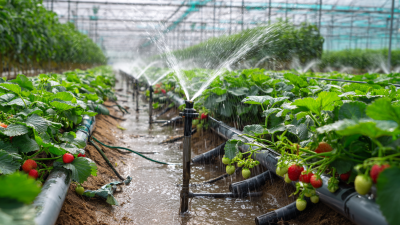
When evaluating your land's size and irrigation needs, start by assessing the total acreage of your agricultural space. According to the USDA, effective irrigation can increase crop yield by up to 40%. Using this data, farmers can better understand how much water their plants require. For smaller plots, a drip irrigation system might be ideal. It delivers water directly to the root zone, minimizing waste.
A larger field may benefit from a center pivot system, which can cover up to 130 acres per pivot. However, specific terrain and crop type also play crucial roles in selecting the right sprinkler. Fields with uneven terrain might require adjustable systems that can adapt to varying elevations. Approximately 75% of irrigated farmland is found in arid regions, suggesting that water distribution efficiency is vital for sustainability in agriculture.
Analyze your water source too. Are you using a well or municipal supply? This influences pressure and flow rate. Recent studies indicate that optimizing water use can reduce costs by 30%. Choose a system that allows for flexibility and ease of use to fit your changing needs. Regular assessment and adjustments are necessary to maintain efficiency and productivity.
How to Choose the Best Agricultural Water Sprinkler for Your Needs?
| Land Size (Acres) |
Irrigation Type |
Water Source |
Sprinkler Type |
Recommended Flow Rate (GPM) |
| 1 |
Drip Irrigation |
Well Water |
Micro Sprinkler |
2-5 |
| 5 |
Spray Irrigation |
River |
Impact Sprinkler |
10-20 |
| 10 |
Center Pivot Irrigation |
Reservoir |
Rotary Sprinkler |
25-35 |
| 20 |
Flood Irrigation |
Municipal Supply |
Gear-Driven Sprinkler |
40-60 |
Factors to Consider for Water Pressure and Flow Rates
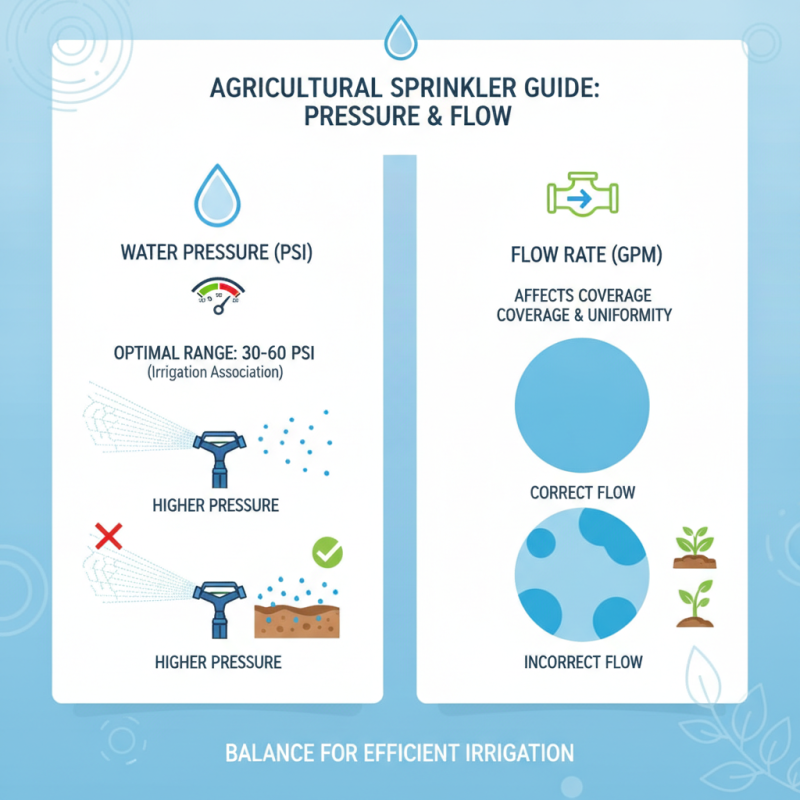
When selecting an agricultural water sprinkler, understanding water pressure and flow rates is crucial. Water pressure affects the distance and coverage of the spray. Higher pressure often yields a finer mist, while lower pressure produces larger droplets. According to the Irrigation Association, optimal water pressure for most agricultural sprinklers ranges between 30 to 60 PSI. This pressure ensures an even distribution without causing soil erosion.
Flow rates also play a significant role in your choice of sprinkler. They determine how much water is delivered over a specific period. A study by the USDA suggests that a flow rate of 1 to 2 inches per week is ideal for many crops. Farmers must consider their crop needs alongside available infrastructure. For instance, older systems may not handle higher flow rates effectively, leading to inadequate coverage or wasted water.
Additionally, not all sprinkler types perform equally under different pressure conditions. Some may become inefficient at lower pressures, reducing uniformity in coverage. It's essential to assess your soil type and crop varieties. This assessment helps identify specific watering requirements. To achieve a balance, farmers should also regularly evaluate their systems for efficiency and make adjustments where needed. This ongoing reflection can lead to improved water management and better crop yields.
Assessing Durability and Maintenance Requirements of Sprinklers
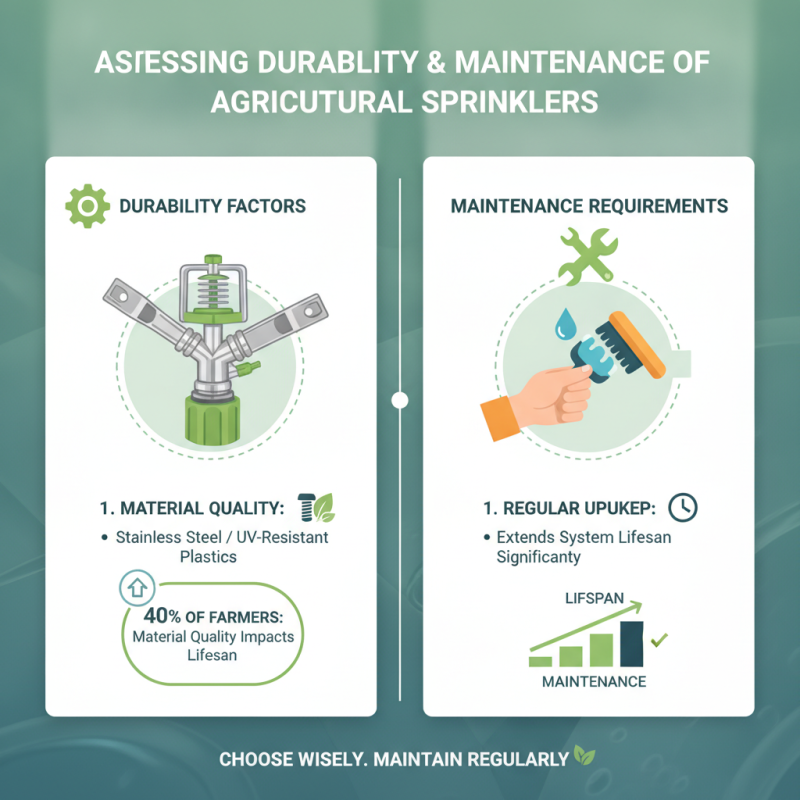
When choosing an agricultural water sprinkler, durability and maintenance are critical factors. Sprinklers made from high-quality materials like stainless steel or UV-resistant plastics tend to last longer. According to industry research, nearly 40% of farmers report that material quality directly impacts the lifespan of the sprinkler system. Regular maintenance can extend this lifespan significantly.
Maintenance requirements vary greatly among different designs. Some systems need frequent checks and cleanings, while others are more self-sufficient. A study by the American Society of Agricultural and Biological Engineers highlights that regular inspection can prevent a 20% performance drop over time. This emphasizes the importance of understanding each sprinkler's maintenance needs before purchase.
Tips: Choose a model that offers replaceable parts. This can reduce long-term costs significantly. Also, consider investing in a sprinkler with built-in self-cleaning features. These innovations can save time and effort, making your farming more efficient. Remember, while some factors are easy to overlook, they can impact productivity over time. Reflect on the time you can devote to maintenance when selecting a sprinkler.
Budgeting for Purchase and Installation Costs of Sprinkler Systems
Budgeting for agricultural water sprinkler systems involves several critical factors. Start with a thorough assessment of your irrigation needs. Consider the size of the area you want to irrigate. Different crops may require varying amounts of water. This will impact the type and size of the system you choose.
Installation costs can vary widely. For example, a basic system may cost less, but complex installations could exceed your budget. Think about the ground conditions too. Rocky or uneven terrain can make installation challenging and more expensive. Don't forget about maintenance fees. Over time, sprinklers will need repairs, which can add to the overall costs.
Lastly, you might underestimate water bills. Efficient systems save water and lower costs in the long run. Take time to research affordable options. Compare quotes from local installers. Talk to experienced farmers about their experiences. This way, you can make a more informed decision.